| OCR Text |
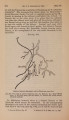
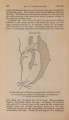
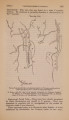
Show 1906.] VASCULAR SYSTEM OF THE CROCODILIA. 6 1 9 kinds of Giocodiles. This vein (the vena vertebralis communis)*, is stated to arise from the anterior cava as a single trunk and to have a very short course superficially along the vertebral column, disappearing from sight-" nach dem er die vierte V. intercosta,lis absesendet hat in den Kanal des Riickgrats um sich mit den Verne spinales zu verbinden." It has thus, as he remarks, only a short course, which terminates immediately behind the fourth rib. There is no indication given as to what species or which species this description refers to. The general account of the venous system is stated merely to refer to " altere Krokodilen," though definite species are now and again referred to in footnotes appended to the description; not so, however, in the case of the veins which concern us here. There is no evidence that I can extract which points to any particular species. I find, however, that there are variations, and that the three species which I have examined do not agree. In Crococlilus cataphractus the azygos veins answer pretty well to the descriptions given by Rathke ; though there are certain differences, and also some other matters not touched upon by Rathke, to which I desire to direct attention. The number of ribs in this species is not mentioned by him +. I find that there are only 12 pairs, i.e. 2 false anterior ribs, 7 true ribs, 3 posterior false ribs. The azygos veins are of exactly the same size on both sides of the body. They arise from the anterior cava on each side behind the origin of the subclavian. On the right side of the body the origin was by two distinct affluents, forming with each other and the vena cava a triangle +. I did not find any such double origin on the left side. The vein runs in a directly transverse direction (i. e. transverse to the longitudinal axis of the body), and close to the vertebral column on each side plunges at once into the parietes. Thence it never reappears upon the surface of the musculature as a longitudinally running vessel, but remains completely buried and hidden below it. The azygos vein is closely accompanied by the corresponding artery (arteria vertebralis communis), which also rises below the surface of the musculature, but is visible at intervals below the peritoneal membrane. At a point about halfway between the origin from the vena cava and the disappearance into the parietes, both artery and vein give off a longitudinally and posteriorly running branch along the lateral body-wall which has its counterpart (in the case of the vein) in Varanus §. In Osteolcemus tetraspis the azygos veins show features of difference which obviously aid in establishing the justice of the generic separation of this Crocodile. As the following statement of fact is based ujoon the examination of two individuals, I imagine that it can be taken as a, description of the normal conditions obtaining in this species. The azygos arises from the vena cava, at least * Loc. cit. p. 255. t Loc. cit. p. 55. X Cf. p. 620, where the same state of affairs is described in Osteolcemus tetraspis. § See p. 616. |