| OCR Text |
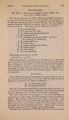
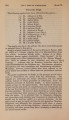
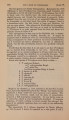
Show 1906.] OF SOUTHERN INDIA AND CEYLON. 657 pleurales liamati. Prostata magna." There is perhaps not much essential difference between a velvety surface and one which is covered with elongate soft papillae (Thordisa), but, so far as the two can be distinguished, the form under consideration belongs decidedly to Thordisa. In Thordisa the outermost teeth are typically pectinate or denticulate, which is not the case in Diaulida. But, as explained above, I do not think that this is a safe generic characteristic. Diaulula has a large prostate, but the organ is also reported as present in Th. macidigera (Bergh, Danish Expedition to Siam, Opisthob. p. 184), Th. dubia, and Th. pallida. It is not impossible that this form should be referred to Phialodoris, which has a penis of similar shape and a prostate. The radula presents no essential differences. But in Phialodoris the nervous system is not concentrated. The dorsal surface is crammed with spicules, which seem to be set in a stellate pattern, and is described as granulate. Its appearance in life, however, may have been different. On the whole, it appears to me safest to leave the present form provisionally in Thordisa until a further examination of Phialodoris podotria (described from one alcoholic specimen) has been made. The specific name crosslandi has priority over gigantea. Kelaart's Doris marmorata is not improbably Phialodoris podotria. It is " hard and granular," and the six branchial plumes are united at the base. Cf. Brock's figure reproduced by Bergh, in Semper's Beisen, Heft xvii. pi. lxxxv. figs. 5 & 6. T rippa. This genus, in which Bergh has incorporated Phlegmodoris, is characterised externally by a rather soft consistency and compound tubercles of irregular shape. Between the tubercles there are often deep pits rendered conspicuous by their black colour. There is no labial armature, and the radula, which is generally rather short, consists of hamate teeth which sometimes bear a few denticles. Ptyaline glands as well as salivary glands are present. There is no armature in the genitalia and a prostate seems not to be recorded. The following forms are perhaps referable to the genus:- 1. T. ornata Bergh. (? = Doris intecta Kelaart.) f 2. T. areolata (A. & H.). \ 3. T. spongiosa (Kelaart). (= T. mephitica Bergh.) 4. T. monsoni Eliot. (? = i>. leoparda Kelaart.) 5. T. hispida Bergh. 6. T. affinis Bergh. 7. T. luteola (Kelaart). (= Thordisa caudata Farran.) 44* |