| OCR Text |
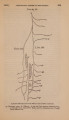
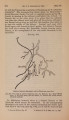
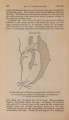
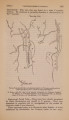
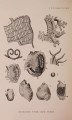
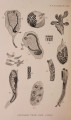
Show 1906.] SOLEXID.E FROM ZANZIBAR. 85 7 adductor muscle to the posterior edge of the proximal portion of the siphon is greater, though the retractor pedis posterior muscle is shorter. The retractor pedis anterior muscles are a little shorter and their bifurcations are hardly discernible. The free portion of the siphon is large, the inlialent chamber being much larger than the exhalent one. The siphonal valves are also strongly developed. The length of the free portion of the siphon, however, cannot be ascertained as a part of it is missing. The distal is deeper than the proximal half of the foot, and more resembles that of fin sis ensis. Regarding the alimentary canal there is relatively a greater difference. The oesophageal and cardiac divisions are smaller. The central division (or cavity receiving the small bile-duct) is situated more anteriorly. The pyloric division is larger. The caecum of the crystalline style is situated on the ventral side of the stomach, and the distal portion of it gradually curves towards the dorsal surface of the pedal cavity. The intestine leaves the stomach more anteriorly, makes a number of loops in and anteriorly to the liver, and passes to the distal end of the caecum of the crystalline style before returning along the right lateral side o o of the same.-H. H. B. It is with some hesitation that I have determined the single specimen at hand as belonging to Solen acincices of Hanley. It agrees in regard to the general curve of the shell and the anterior truncation and posterior end of the valves, also in respect of the colour and periostracum. It is smaller than the type, being only 2 inches in length and 11 millims. in breadth, and, at this age, looks rather more slender. However, having only a single shell to judge from, it is impossible to say whether this apparent slenderness would prove to be a constant character. The uncertainty of the identification is increased by being unable to compare it with the type of the species, which is only known to me by the description and figure. Mr. Crossland observed that the foot, in life, was fiat and tongue-shaped, and that by rapid beating of it from side to side, the animal swam round a basin in which he had placed it so actively, that the siphonal or posterior end of the shells protruded from the water.-E. A. S. S olen sloanii Gray. Solen sloanii Gray, MS. Brit. Mus.; Hanley, Cat. Biv. Shells, 1843, pp. 12 and 336, pi. xi. fig. 18; Sowerby, Conch. Icon, vol. xix. pi. iii. fig. 10; Hedley, Proc. Linn. Soc. N. S. Wales, vol. xxiv. p. 432 (notes on animal). Solen versicolor Philippi, Abbild. vol. iii. p. 43, pi. ii. fig. 3 (1848). Solen philippianus Dunker, MSS. ; Sowerby, Conch. Icon, fig. 13. Hab. Wasin I., 10fatli. (Crossland); Port Jackson (* Challenger '). One valve only.-E. A. S. 5 7 * |