| OCR Text |
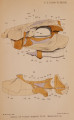
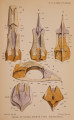
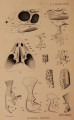
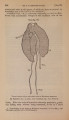
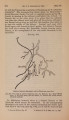
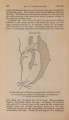
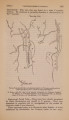
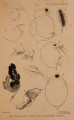
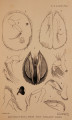
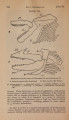
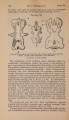
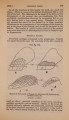
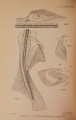
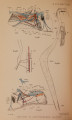
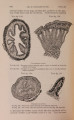
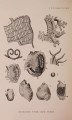
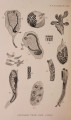
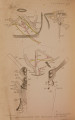
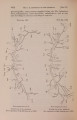
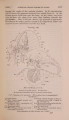
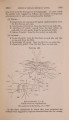
Show 1 9 0 6 .] DIAPTOSAURIAN REPTILE. 5 9 3 perhaps in front there may be only one or two rows. Behind, there are four rows of similar-sized obtusely pointed teeth, and on the inner side of the bone three additional rows of more minute teeth, which apparently do not meet the dentary and are unworn. The teeth seem to have a thin layer of enamel and to be implanted in the bone rather than anchylosed to it. When the jaw is worn, the teeth and bone together form a grinding-surface. The exact relations of the teeth to the jaw could be certainly determined only by sectioning one of the fragments, and this I do not feel at liberty to do. A large part of the jugal is preserved in specimen B, and in specimen A the cast of almost the whole bone. It forms practically the whole of the lower border of the orbit. In its relations to the maxilla, to the postorbital, and to the quadrato-jugal it is almost identical with that in Palceohcitteria. There is clear evidence of a lower temporal fossa bounded below by the posterior process of the jugal. PI. XL. fig. 3 represents the cast of the jugal in specimen A and fig. 4 part of the jugal in specimen B. The postorbital bone is preserved in perfect condition in specimen B. It is triangular, and strikingly like the corresponding bone in Sphenodon. It divides the upper from the lower temporal fossa and, in part, both from the orbit. It is represented in fig. 4. The postfrontal is preserved in specimen B. It is a small triangular bone not unlike that of Sphenodon. It articulates by a long suture with the frontal and by a short one with the parietal. It is shown in fig. 5. The frontals are broad and rather flat. They form only a short part of the supraorbital margins between the prefrontals and the postfrontals. The whole of the supraorbital ridge is slightly elevated, owing to there being a depression along the frontal bone and on to the postfrontal. On the whole of the upper surface of these bones, but chiefly in the depression, are a number of shallow pits, which suggest the possibility of their having lodged glands in connection with the skin. The narrowest part of the interorbital region measures 10*5 mm., and the greatest measurement across the frontals is 14 mm. The parietals are well preserved in specimen B, They are anchylosed, and like those of Sphenodon form, in their posterior two-thirds, a low median ridge. In the anterior third this median ridge divides intot wo feeble ridges, which pass forwards and outwards and end at the suture between the parietal and the frontal. To the naked eye there appears to be no parietal foramen, but when the bone is examined microscopically there is seen to be a small median foramen about as large as a pin-point. I think there can be little doubt that this is a rudimentary parietal foramen. It measures about *5 mm. in greatest length. Posteriorly the parietals pass outwards to meet the squamosals as in Sphenodon. Though portions of the squamosal and probably quadrato-jugal, exoccipitals, and a few other bones are present, they are either too 40* |