| OCR Text |
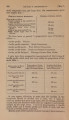
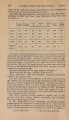
Show 190(1.] MAMMALS FROM KOREA. back. General colour above greyish brown, something between u broccoli-brown and " grey no. 5 of Ridgway, intermixed with the usual silvery gloss characteristic of northern Crocidurce. Under surface drabby whitish, lighter than in the Japanese (J. dsi-nezumi. Upper surface of hands and feet greyish white. Tail of medium length, the usual short hairs clothing it thickly, while the long bristle-hairs are unusually numerous and continued nearly to the tip. Its colour is brown abovre, whitish below. No trace of a lateral gland perceptible on any of the specimens, but all were taken in winter, when it is usually less conspicuous. Skull short, broad and low. Second and third upper unicuspids subequal, both in height and cross-section, the former about level with the well-developed anterior basal cusp 011 the carnassial. 1 )imensions of the type, measured in the flesh:- Head and body 58 mm.; tail 37 ; hind foot 11*5 ; ear 9. Skull--extreme length from condylion to front face of incisors 17-5 mm.; basal length 151 ; greatest posterior breadth 8*2 ; interorbital breadth 4; front of il to back of m3 7*8 ; tip of il to tip of p1 4. Dimensions of four other specimens :- Head & body. Tail. Hind foot mm. mm. mm. 6 . . . 58 3 8 13 6 ••• 5 5 35 12 2 . . . 5 8 37 11 $ ... 6 0 3 6 12 Type. Adult male. B.M. No. 6.12.6.27. Original number 671. Collected at Min-gyong, 28 November, 1905. This little Shrew is very like C. lasiura, but is only about half the bulk. From the Japanese C. dsi-nezumi, perhaps its nearest ally, it may be readily distinguished by its smaller size, shorter tail, and whiter belly. 4. P utorius s ib ir icu s Pall. ( 6 ) Fusan, Korea. (Skin purchased in market.) c3 . 627-629. $. 623-626. Quelpart Id., 3000', September. It is exceedingly difficult to make out the races of these Asiatic Minks, owing to their variability in colour, their seasonal change, and considerable sexual difference in size. The Japanese P. itatsi is really scarcely more than a subspecies of the mainland form, while I see no reason to distinguish in any way the examples obtained by Mr. Anderson in Quelpart. They are, however, all in the dull summer pelage, while specimens in that coat are almost entirely absent from our mainland and Japanese series. The Fusan skin is in the winter coat, and is almost as yellow as true Siberian examples. |