| OCR Text |
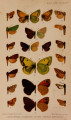
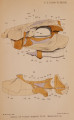
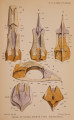
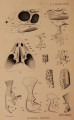
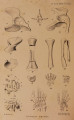
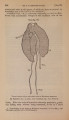
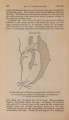
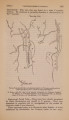
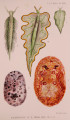
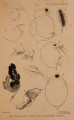
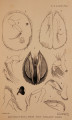
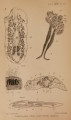
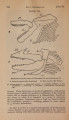
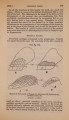
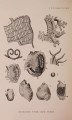
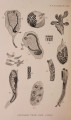
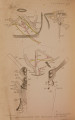
Show 660 SIR C. ELIOT ON NUDIBRANCHS [June 19, species. The comparatively short radula and small inner teeth are also characters of Trippa, and the denticulation, though rare in the genus, is found in Trippa monsoni. Specifically, I think the form may be identified with Kelaart's Boris luteola. His drawing is not very good and his description slight, though not inaccurate. Mr. Farran's type specimen of Thordisa caudata was found in Ceylon, and the remarkable coloration, supported by this identity of habitat, seems a sufficient reason for regarding the forms as the same. T r ip p a s p o n g io s a (Kelaart). (Plate XLIY. fig. 2.) (Kelaart, 1. c. I. p. 302. Cf. Doris areolata, A. tfe H. 1. c. p. 119. Phlegmodoris mephitica Bergh in Semper's Reisen, Heft xiii. p. 594.) Kelaart's figure and description seem sufficient to identify this species with Phlegmodoris mephitica B. The coloration, consistency, rhinophore-sheaths, and branchiae are all points of agreement. Kelaart was apparently unable to find the oral tentacles, which is not inconsistent with Bergh's account of them as folds on either side of the mouth. Andr6 (" Mollusques d'Amboine," in Revue Suisse de Zoologie, tome iv. 1896, p. 401) suggests that T. spongiosa is the same as Trippa (Doris) areolata A. & H. He apparently had before him specimens from Amboina, but unfortunately gives no description. The identity is not improbable, for the only certain distinction between the forms is that there are several black pits in the dorsal surface of T. areolata, whereas in T. spongiosa the black pigment is wanting, though the back is said to be " deeply pitted." But without a further comparison of specimens it is impossible to decide whether the two forms are colour varieties or distinct species. For some account of T. areolata, see my paper on " Nudibranchs from East Africa and Zanzibar," in Proc. Zool. Soc. 1903, ii. p. 369. T r ip p a m o n so n i Eliot. (Plate XLY. fig. 1.) (Eliot, Proc. Zool. Soc. 1903, ii. p. 371. Cf. Kelaart, Doris leoparda, 1. c. I. p. 294.) These two forms are probably identical. They agree in size and in a somewhat remarkable coloration, composed of greyish or purplish spots separated by white reticulations. The rhinophores and branchiae are yellowish or greenish. Kelaart, however, does not mention any pits such as are found on the back of T. monsoni. An examination of specimens from Ceylon woidd probably decide the question of identity. If it is established, the animal will be Trippa leoparda. D o r i d o p s i d ^ . The works of Bergh and Vayssi&re contain much valuable information about this family, but Hancock, " On the Anatomy of |