| OCR Text |
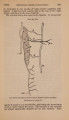
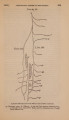
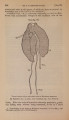
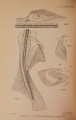
Show which the posterior tail-like extremity of the right lobe is so lengthy in proportion as it is in Corollas madagascciriensis. Not only is it very long, but it is also very thin, ending posteriorly in the tiniest filament of liver-tissue. There is no doubt, however, that the extreme end is liver-tissue, and that I have not confounded with this unusual extension a portion of the vena cava, with which, possibly, in a badly preserved specimen one might have confounded it. The liver almost, if indeed not actually, touches the spleen behind, and comes very near to the gall-bladder, which organ is, as a rule, separated by a considerable space from its posterior termination. The spleen is smallish and dark red in colour and uneven in form, being lobulated, the lobules, however, showing no tendency to become separate from each other. It lies, as will be gathered, just in front of the gall-bladder. The pancreas is firmly fixed at the junction of the slender pyloric part of the stomach with the wider small intestine and lies on both sides of the gut. The ducts arising from the gall-bladder form a plexus upon it. Both lungs of Corallus are functional; but there is the usual disparity of size between them. The difference of size, however, is greater than in Python. Both lungs possess a headward extension in the form of a short pyramidal cpecum directed forwards. The tissue of the larger lung is continued headwards as the membranous interval between the tracheal rings dor-sally. There is, however, no trace whatever of any invasion of this membrane by lung-tissue. It is merely membranous. The bronchus belonging to the larger lung is continued for a long way down it, very much further than in any species of Python which I have had the opportunity of examining. This tracheal or bronchial extension reaches, in fact, some little way down the liver. Its exact place of ending is rather difficult to define. Towards the end it narrows rather rapidly, but is thereafter continued further as a fibrous band. A similar fibrous band exists in the Python, P. spilotes; but it begins much earlier in the lung. The extension of the bronchus is reminiscent of the lung of Boa diviniloqua rather than of any Python with which I am acquainted. In the smaller left lung the bronchus is also continued, but extends only for two or three rings. The origin of the left bronchus appears as a perforation in the right bronchus ; it is exactly in the middle of the rings of the latter, not to one side for example. It is to be noted that the extension of the bronchus down the right lung differs from a similar extension in Coluber and some other Snakes by reason of the fact that the rings are flattened out. There is no such occlusion of the rings dorsally to form a practically closed tube as we meet with in the genus Coluber. The fibrous band which seems to continue the bronchus down the lung is probably really to be looked upon as morphologically the posterior end of the cartilaginous series of bronchial semirings. The present species, when compared with Python, offers evidence that this is 5 1 8 MR. F. E. BEDDARD OX THE VASCULAR AND [M a y 1 , |