| OCR Text |
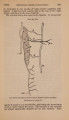
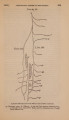
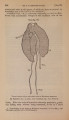
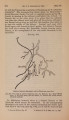
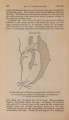
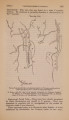
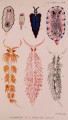
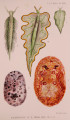
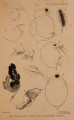
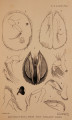
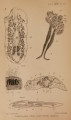
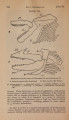
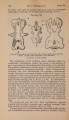
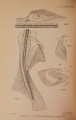
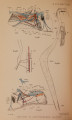
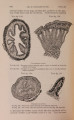
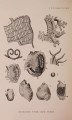
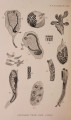
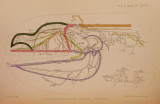
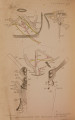
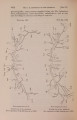
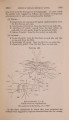
Show 1 9 0 6 . ] THE HON. W. ROTHSCHILD ON A NEW BUSH-BUCK. 691 P l a t e X L V I I . Fig. 1. Pliidiana unilineata, tooth (p. 685). 2. Kalinga ornata (p. 670). a, the proximal; b, the distal region of the protruded buccal parts; c, the place where the radula was found; d, the mouth. 3. Platydoris formosa (p. 646). Scales from the reproductive organs, a, lateral view of a scale showing granulations; b, view of a scale from above; c, section through a scale. 4. Doriopsilla miniata (p. 665). Nervous system and anterior part of alimentary canal, seen from the side. 5. Doridopsis nigra (p. 664). Do., do. 6. Doriopsilla miniata (p. 665). Nervous system and alimentary canal, seen from below. 7. Doridopsis nigra (p. 664). Do., do. In the last four figures the nervous system is drawn in red and the digestive tract in black, and the following lettering is used :- a, central nervous system ; b, buccal ganglia; e, genital ganglion; d, ptyaline or mouth-gland; e, duct of do.; f proboscis ; g, salivary glands ; I, liver; m, mouth. 2. Description of a new Zebra. By the Hon. W a l t e r R o t h s c h i l d , Ph.D., F.Z.S. [Received June 19, 1906.] E quus an n e c t en s , sp. n ov . This very distinct form of Zebra is at once distinguishable by the very narrow white stripes and broad black bands extending from behind the ears to the root of tail. The black bands extend from root of tail much further longitudinally towards the shoulder than in any other form, all being joined up with the transverse bands, and not broken up as in most forms of E. burchelli. It differs at first sight from E. zebra and most forms of E. burchelli by the entire absence of red on the face and muzzle, thus approaching E. burchelli selousi. Head, legs, and tail evenly banded with narrow white bands on an intense black ground. Ears strongly banded. Skull.-This shows, from its less bombiform frontal and greater width across the palate, an intermediate character between the forms of Equus burchelli and Equus zebra; a very distinct feature is the great breadth and convexity of the malar and maxillary. Habitat. Neighbourhood of Fort Jameson, N.E. Rhodesia. 3. Description of a new Bush-Buck. By the Hon. W a l t e r R o t h s c h i l d , Ph.D., F.Z.S. [Received June 19, 1906.] C e ph a lo ph u s ro b er t s i , sp. nov. (Male type.) This is nearest to C. harveyi, C. castaneus, C. callipygus, and C. natalensis, but differs from them all by being quite uniform in colour, of an orange-chestnut of a much paler, yellower, and brighter shade. |