| OCR Text |
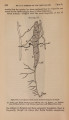
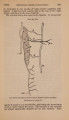
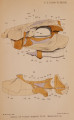
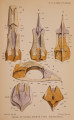
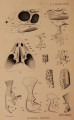
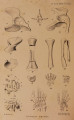
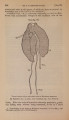
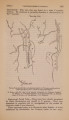
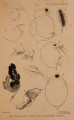
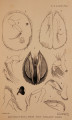
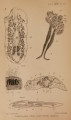
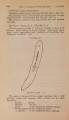
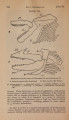
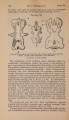
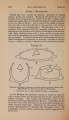
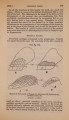
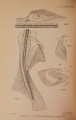
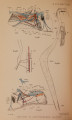
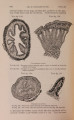
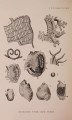
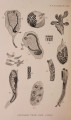
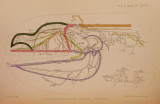
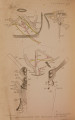
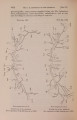
Show 1 9 0 6 . ] OF THE NEW ZEALAND LAKES. 6 9 9 of the shell is covered with closely-set and irregularly shaped rounded or pointed tubercles (figs. 1, 2, 3) : a prominent transparent tubercle in front of the middle and just within the dorsal margin, through which the darkly coloured eye is conspicuous. Colour dark grey. Length '77 mm. Male. The shell of the male, seen dorsally (fig. 2), is more angular in outline, widest near the rounded, subtruncate, posterior extremity, abruptly tapered in front. The two pairs of antenna? are like those of Notodromas monachus, the posterior pair with very slender apical joints (fig. 5) and with swimming-setre reaching beyond the apices of the terminal ungues ; the second joint bears at its distal extremity a long hair with a delicately bulbous base ; the terminal unguis in the male is minutely bipectinate. Mandible-palp (fig. 6) bearing a minute branchial process which has a few (4 or 5?) upward-pointing setae. The first pair of maxillae (PI. X LYIII. fig. 6) of the usual type and provided with a large branchial plate; second maxilla in the female (PL L. fig. 7) consisting of an expanded club-shaped lamina which bears a fringe of plumed setae at the distal extremity and a simple fusiform palp near the base, between which and the apical fringe are two stout plumose branchial filaments : in the male the maxillae of the second pair form strong prehensile organs (figs. 8, 9), differing somewhat on the two sides and destitute of branchial setae. The feet of the first pair are of the usual type (fig. 10), but have an unusually long apical claw ; those of the second pair (fig. 11) bear two slender apical setse, one of which (the longer) is reflexed. Caudal rami (fig. 12) slender, with three slender, closely approximated apical setae. The male sexual apparatus is of the usual type (PI. XLYIII. figs. 8, 9): a pair of simple, very prominent, subspherical, pedunculated eyes (PI. L. fig. 13), which are deeply pigmented and have a colourless transparent cornea Habitat. About a dozen examples of this species were taken in a netting among reeds in Lake Waikare. Being preserved mostly in picric acid, the shells have lost their mineral substance and become very thin and flexible, so that the normal characters are not easily ascertained-especially the distinctive sexual characters. I have no doubt, however, that this is the species described by the Rev. R. L. King {loc. cit. ) ; but his figures are scarcely adequate, and I have here given drawings, so far as my material would allow, of the more important parts. As regards the shell, some allowance must be made for the softened, membranous condition. The slight differences between this species and Notodromas seem, perhaps, scarcely to call for a separate generic name, but the term Newnhamia having been already proposed by Mr. King it may very properly be retained, at any rate provisionally. [Since writing the foregoing description, I find that N. fenes-trata has been described and figured by Yavra in a paper- " Die Ostracoden vom Bismarck-Archipel " (Archiv f. Naturgesch 1901). Y&vra's specimens were taken in the Island of Neu- Pommern. Mr. King's specimens were from Tasmania.] |