| OCR Text |
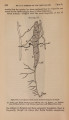
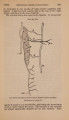
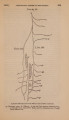
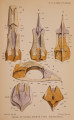
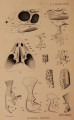
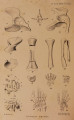
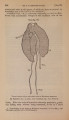
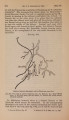
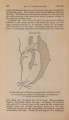
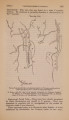
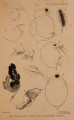
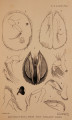
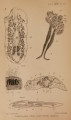
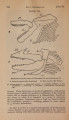
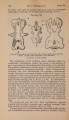
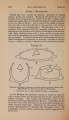
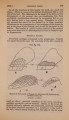
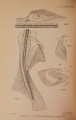
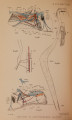
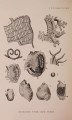
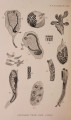
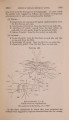
Show 1906.] OF SOUTHERN INDIA AND GEYLON. 663 D o r id o p s is c l a y u l a t a A. & H. (A. & H. 1. c. p. 127. Eliot, Proc. Zool. Soc. 1904, ii. p. 278.) Three specimens in a fair state of preservation. Though the animal has a general resemblance to Doridopsis denisoni, it would seem to be easily distinguishable from it externally. The margin of the branchial pocket is much more distinctly tuberculate, and the large dark green areas on the back are very plain. There also seem to be differences in the genitalia. They are much hardened, but it is clear that the vas deferens is much shorter than in D. denisoni and not so elaborately coiled. The lower part of the vas deferens and the penis are thickly covered with small, slightly bent, yellowish spines. The arrangement of the alimentary canal, so far as it can be still ascertained, is as in D. denisoni. A large double mouth-gland lies beneath the buccal mass and opens into it by a single duct. There is a constriction after the proboscis, and another about halfway between the proboscis and liver. D o r id o p s is (?) g r is e a (Kelaart). (Kelaart, 1. c. p. 297.) The statement that the " mouth is surrounded with a white veil " makes it probable that this species is a Doridopsis. Kelaart uses a similar expression concerning D. carbunculosa; and it is evidently an attempt to describe the two small tentacles characteristic of the genus which are often attached for the greater part of their length and inclined towards one another above the poriform mouth. D. grisea is possibly the same as the animal figured by Bergh in the Opisthobranchia of the ‘ Siboga' Expedition, plate v. fig. 19, as " Doriopsis ? " D o r io p s il l a Bergh. (See Bergh, Jahrb. d. Deutsch. malak. Gesell. 1880, pp. 20-30 ; id., Zool. Jalirb., Abth. fur Syst., Jena, 1896, Brind ix. Iieft iii. pp. 454-8 ; and Vayssiere on Doriopsilla areolata in ‘ Talisman' Opisthobranclies, 1902, pp. 235-7, and Opist. de Marseille, iii. 1901, pp. 50-52.) In Doriopsilla the dorsal surface is granulate and harder than in Doridopsis; but the chief difference between the two genera is that whereas in Doriopsilla the buccal ganglia beneath the alimentary tube lie immediately behind the main body of the central nervous system, in Doridopsis they lie at some distance behind it on a constriction of the alimentary tube, and are united to the nerve-collar by rather long connectives. The difference may seem slight, but is of considerable structural importance, as will perhaps be understood by an inspection of figs. 4-7, PI. XLVII., which give comparative views taken from beneath and from the side of the central nervous system and |