| OCR Text |
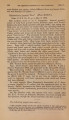
Show 750 MR. C. TATE REGAN ON [June 19y cartilages of the dorsal fin are very similar to those of the existing Cestraciontidse and Squalidae. The pelvic fin is remarkable for its primitive structure, only 6 basalia being fused to form a basi-pterygium, the posterior 8 being distinct. If Campbell Brown's interpretation of the pectoral fin be accepted, its structure is quite unlike that of any known Shark. I am convinced, however, that he has mistaken the propterygium for the metapterygium and vice versa, and that the fin is in reality almost exactly similar to that of Squalus or Pristiophorus. B. Palceospinacince. Dorsal fin-spines smooth. No cephalic spines. Vertebral column with calcified centra. The Triassic and Cretaceous genera Palceospinax and Synechodus have a dentition not unlike that of Hybodus, to which they are evidently related. The postorbital articulation of the pterygo-quadrate has been described in Synechodus by Smith Woodward. Family 3. Cestraciontid^e . Body not depressed ; five gill-clefts on each side, the posterior ones above the base of the pectoral fin. Paired oro-nasal grooves present. Each dorsal fin preceded by a spine ; anal fin present; pectorals normally shaped. Pterygo-quadrate with praeorbital articulation to the cranium, the palato-basal process being broad and greatly developed. Vertebral centra, calcified. The genus Cestracion, ranging from the Jurassic to the present day, may be regarded as allied to the Hybodontidae in so far as both have been derived from a common ancestor with a generalised dentition and without articulation of the pterygo-quadrate to the cranium. The resemblance of the lateral teeth to those of Acrodus most certainly does not indicate any special relationship to that genus, which is clearly a modified Hybodus. Family 4. S qualidse. Body not depressed. Five or six gill-clefts on each side, the last in front of the base of the pectoral, which is normally shaped. No oro-nasal grooves. Each dorsal fin often preceded by a spine; no anal fin. Teeth small or moderate, sometimes conical or cuspidate, often compressed. Pterygo-quadrate not articulated to the cranium. Vertebral centra calcified.. Of the Squalinse, Squalus and Centrophorus appear to date from the Cretaceous. Some authors would place the genera with normal snout and without apparent dorsal fin-spines in a distinct family, but it must be borne in mind that the recent researches of Helbing have shown that rudimentary spines are present. Moreover, in some species of Centroscymnus the spines are very small and do not even pierce the skin. Jaekel has described the anatomy of Pristiophorus in detail and |