| OCR Text |
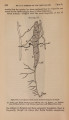
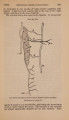
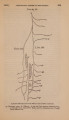
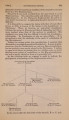
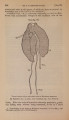
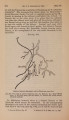
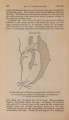
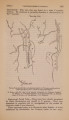
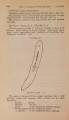
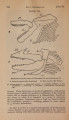
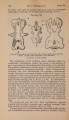
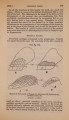
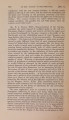
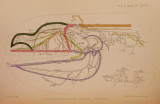
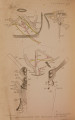
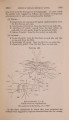
Show 508 MR. F. E. BEDDARD ON THE VASCULAR AND [May 1, and I shall take occasion to refer in the course of the following notes to what is already known relating to the organs and systems which I have myself examined in Boa diviniloqua. My own notes chiefly refer to the vascular and respiratory systems. Anterior Abdominal Veins.-These veins in the present species of Boa retain their distinctness until within an inch of the gallbladder. Posteriorly each arises, as Gadow has figured from the divided caudal. The exact arrangement in Boa diviniloqua is shown by dissection to be this:-Each half of the divided caudal vein again divides into two trunks considerably behind the kidneys. This occurs at a slightly different level on the two sides of the body. On the left side, the division took place, in a male individual measuring 52 inches from the tip of the snout to the cloaca, at a point 3\ inches from the cloaca and 6| inches from the posterior end of the left kidney. On the other side of the body, the point of separation was a trifle further forward in correspondence with the anterior shifting of the right kidney. Only the left side is figured in the work referred to below, but the junction of both anterior abdominals with the corresponding renal afferent is mentioned in the text. The figure* of Pelophilus madagascariensis shows a difference from what I have found in Boa diviniloqua. In the latter species, immediately after the separation of the renal trunk from the caudal vein, the renal branch receives an important affluent from the parietals. This is found on both sides of the body. I ascertained with care the exact point of entrance of this vein, since there are apparently differences among the Boidse. By Gadow the vein is represented as debouching into the caudal before it has divided into the renal afferent and anterior abdominal. In Eunectes and Eryx I have described and figured or described the vein as opening exactly at the point of divergence of the afferent renal and anterior abdominal f , or as in the present species. In the example of Boa constrictor which I dissected the details (text-fig. 89) are somewhat different. The two anterior abdominals retain their separateness until within 4^ inches of the gall-bladder. As the snake measured 70 inches from the snout to the cloacal orifice, the porportions are very much the same as those given above. The origins of the two posteriorly from the caudals are quite symmetrical; they are exactly opposite to each other. And this is in spite of the fact that the kidneys are unsymmetrical as in Boa diviniloqua. In fact the kidneys are more unsymmetrical. The left kidney, which is 5 J inches in length, is 12 inches from the cloacal orifice. The right kidney is smaller, 4J inches, and only overlaps the left kidney for the space of 1| inches. There is a greater overlap in Boa diviniloqua. Renal Veins. The afferent renal veins, after parting from the roots of the anterior abdominal, receive affluents from the parietes. * In Bronn's c Thierreich,' Bd. vi. pi. cxxxv. fig. 2 v.a.s., v.ad. f " Notes upon the Anatomy of certain Snakes of the Family Boida?P. Z S 1904 rol. ii. p. 113, text-figs. 21, 22. |