| OCR Text |
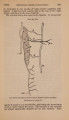
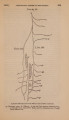
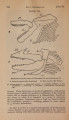
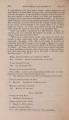
Show 854 OX TIIE LESSER HORSESHOE BAT. [Nov. 27, fluttering her wings at the same time with a tremulous motion, entirely different from the struggles of a bat which is striving to escape from the hand which holds it. Then, with rapid movements of the jaws, accompanied by a nervous trembling of the head, she bit the worm along its entire length, passing it through her mouth, thus paralysing the captive. The head of the mealworm was rejected, and when this had been severed from the body, the remainder was eaten slowly, though the movement of the bat's jaws was rapid. The horny caudal extremity of the mealworm was also rejected ; this and the head usually remained sticking to or near the bat's lips, and were wiped off against the bat's body. • Neither foot nor thumb was used in order to get rid of these particles. We thus see that we have several facts which, though not founded 011 a sufficient number of observations to form conclusive evidence, suggest points of interest in the study of the species. 1. The Lesser Horseshoe-and the same is true of many other species-usually occupies different retreats in summer and winter, and where the same caves are used at both seasons retires further into the recesses during the colder months. 2. During the earlier period of occupation of the winter retreats, sleep is not profound-not indeed to be described as hibernation in the accepted meaning of the word. 3. During a portion at any rate of this period the bats feed- presumably in the caves. 4. The food is. in certain instances, consumed when the animal is at rest and not upon the wing. 5. Although unable to make use of the interfemoral membrane, after the manner of other bats, the species so far shares or retains the habit that it makes use of the interbrachial membrane for the same purpose. Whether this last trait is the survival of a habit, or is the first step towards a more perfected habit in bats with more fully developed membranes, is a point on which 1 am not prepared to dogmatise. We must first learn if the short upturned tail is rudimentary, or if the animal gains any advantage through the degeneration of that appendage. Mr. R. Xewstead (6) suggests that when the. bat is hanging at rest, the tail and the inferior surface of the membrane form a " deep, narrow trough: an excellent apparatus to carry off any drops of water that might fall upon it from the roof of its habitat.' The spots, however, which are chosen by the bats are usually in dry parts of the caves. The tail is carried erect when the bat is climbing-the Lesser Horseshoe cannot walk on a flat surface ; and I feel certain that it was carried in this position in flight by my captives. Mr. Oldl lam observes (12) that " the legs showed very distinctly against a white ceiling when viewed from below, but this was possibly due to the shortness of the tail, and not to its being erect or recurved " ; but though the legs certainly were distinct, they appealed to me to be slightly flexed and not fully extended |