| OCR Text |
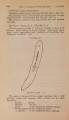
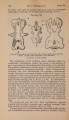
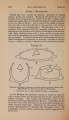
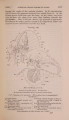
Show 1906.] OF SOUTHERN INDIA AND CEYLON. 671 1867." It appears to be specifically the same as the smaller specimens. It is rather rectangular in outline and measures 106 mm. in length, 49 in breadth, and 41 in height. The coloration is brown of various shades; the dorsal surface and most of the branchiae are dark brown ; the sides of the body, the foot, the exserted proboscis, the rhinophores, all the dorsal processes and in places the tips of the branchiae are light yellowish brown. The back is flat; the margin does not project, but is clearly marked by a line of ramose processes extending at least as far back as the branchiae. Of these processes, eight on each side are taller than the others, and the largest are about 6 mm. high and 5 mm. broad. They are branched three or four times, but as preserved suggest not so much branches as aggregations of tubercles. There are ten similar but rather smaller processes on the oral veil, varying from 2 to 5 mm. in length. Besidas these marginal appendages, both the back and the sides of the body are irregularly sprinkled with processes of all shapes and sizes, varying from a height of 2 mm. to microscopic dimensions. The larger are distinctly ramose, the smaller apparently simple. The rhinophore-pockets are not much raised and the margins are studded with small processes like the rest of the back. The rhinophores are completely retractile, smooth below, but bearing about 40 perfoliations on the top part, which is bent backwards. The large branchiae cover the posterior third of the back. They are quadri- or even quinque-pinnate and consist of four groups :- (a) Left posterior. An enormous plume, 30 mm. long and 35 broad, arising from a single stem, but dividing close to the base into two large and two smaller branches. There is a pocket-like hollow round the base, but the plume is by no means retractile and extends beyond the dorsal margin. (b) In front of this large plume and a little nearer the median line is a smaller group (14 mm. x 16 mm.) with three main divisions, (c) Rather to the right of this and on the middle line of the back is another group of two plumes (about 20 mm. x l 2 mm.), which seem to rise from a common base. (d) On the right is another group, about the same size as the last, which seems to consist of two plumes arising from a common stalk, though it is hard to be certain of this as the back is much corrugated. There is no large plume on the right corresponding to (a), and the whole arrangement of branchiae is asymmetrical. The anal papilla is on the median line just to the right of (a). Though the opening is very large, it is low and inconspicuous. In front of it lies another opening, probably the renal pore. On the right side of the body, about halfway down and 25 mm. from the frontal veil, is the genital opening-a large simple pit in the interior of which are the separate sexual orifices. P roc. Z ool. Soc.-1906, No. XLV. 45 |