| OCR Text |
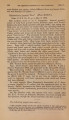
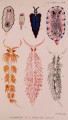
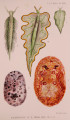
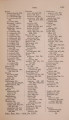
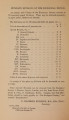
Show 1 9 0 6 . ] OF SOUTHERN INDIA AND CEYLON. 641 123. Chr. marpessa Bergh. 124. Chr. venustct Bergh. 125. Chr. ophthalmica Bergh. 126. Chr. nodulosa Bergh. 127. Chr. pantherina Bergh. All 128. Chr. papulosa Bergh. V f^ro m tvh,e- 4 Siboga ' 129. Chr. J ogce Bergh Expedition. 130. Chr. inopinata Bergh. 131. Chr. laclea Bergh. 132. Chr. bimaensis Bergh. 133. Chr. virgata Bergh. Basedow and Hedley have described Chr. epicurea under the name of Hypselodoris (Trans. Roy. Soc. South Australia, vol. xxix. 1905, pp. 141 & 153), and wish to substitute this generic name (Stimpson, Proc. Ac. Nat. Sci. Philadelphia, vii. 1855, p. 388) for Chromodoris. It would be a pity to drop an accepted and widely used name like Chromodoris in favour of one which has never been in use and which w~as only tentatively proposed for an imperfectly described animal. But in any case Stimpson's name (1855) cannot claim priority, for Ehrenberg's Glossodoris, Pterodoris, and Actinodoris (1831) are admittedly Chromodorids, though for the sake of convenience the names have not been revived (see Bergh, " Kritische Untersuchung der Ehrenberg'schen Doriden," Jahrb. d. d. malakozool. Ges. iv. 1877, pp. 45-76). The list of 133 Chromodorids will no doubt be found to contain many synonyms. Many of the tropical species are known only by their external coloration, and when it is possible to examine many specimens the coloration generally proves to be variable. Very often different colours become predominant in different individuals. Chr. diardii var. nigrostriata is generally bluish grey with faint blotches of pale yellow, but sometimes the yellow is developed at the expense of the blue and the whole animal appears to be lemon-colour. Chr. quadricolor sometimes looks as if it were light-coloured with black bands, and sometimes as if it were black with light bands. A difference of intensity of tens produces a difference of colour : thus, red becoming paler may fade into orange, deep yellow, light yellow, and yellowish white, or becoming darker it may be intensified into reddish brown or lake, purple, purplish black, and black. In pale specimens markings, especially borders, have a tendency to disappear; in full-coloured specimens they tend to multiply, and scattered dots may collect and fuse so as to form blotches. Lines sometimes break up into a row of dots, but on the whole the distinction between the spotted and striped forms seems more persistent than others. Though these variations of tint and pattern show that we must not expect uniformity in a species, it is also clear that unless the resemblance in colour is striking and detailed, it is by no means safe to conclude that similar forms are specifically 43* |