| OCR Text |
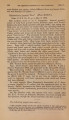
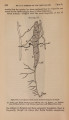
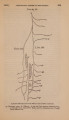
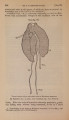
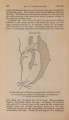
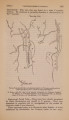
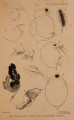
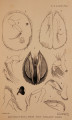
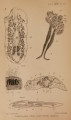
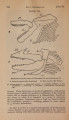
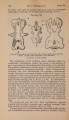
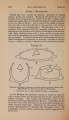
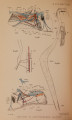
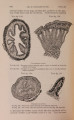
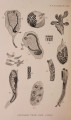
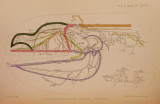
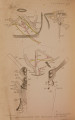
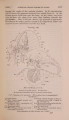
Show 7 1 0 MR. F. F. LAIDLAW ON THE POLYCLAD [J u n e 19, situated at about a fifth of the total body-lengtli from the anterior margin. The pharyngeal opening is subcentral, and the pharynx is fairly large and similar to that of Leptoplana in appearance (see text-fig. Il l , p. 708). The gut-branches are numerous. The male and female genital ducts open together into a small antrum at the extreme hind end of the body. The epidermis contains no rhabdites, but many of the cells composing it resemble in appearance goblet-cells, and are no doubt concerned in the production and excretion of mucus or pseudo-rliabdites. The preservation of the epidermis is unfortunately not good. The basement membrane is readily distinguishable in the sections. Under it lie first a layer of longitudinal muscle-fibres, within these are circular and diagonal fibres not differentiated into separate strata, and lastly, on the ventral side only, an inner longitudinal layer. As is the case in many other Polyclads, the main gut is clearly marked off from the branches by the fact that in its walls are j^resent large numbers of unicellular glands which are not present elsewhere in the alimentary tract. The main features of the anatomy of this species are shown diagrammatically in fig. 2 of Plate LII. Male apparatus.-The vasa deferentia unite below about the hinder end of the large female accessory vesicle to form a single rather convoluted duct, which runs backwards through a special sheath or casing of tissue which appears to be prostatic in character. In this part of its course the ductus ejaculatorius has a very thin wall. As it approaches the antrum the wall becomes thicker, and at the same time the tissue surrounding it takes on gradually a definite muscular character. Finally the duct opens at the apex of a small, conical, muscular penis which projects into the antrum immediately below the termination of the vagina (PI. LII. fig. 2, $ ). It will be most convenient to describe the female apparatus by following its course in the opposite direction, that is to say forwards. The vagina is a simple non-muscular tube wThich receives the secretion of the shell-glands near its termination and runs forwards, lying at first above the sheath of the ductus ejaculatorius. It passes beyond this for some distance, nearly as far as the hinder level of the pharynx, there turning first upwards and then backwards, it opens at once into a large accessory vesicle. Just before this it receives the common opening of the two uteri. Beyond the point where the shell-glands lie, the vagina is surrounded along its whole course by unicellular glands which form as it were a second outer layer of the wall of the duct. The accessory vesicle is large, non-muscular, with glandular walls. It extends backwards nearly as far as the antrum, and is distended with a granular secretion to such an extent that it presses on and nearly occludes the lumen of the vagina when that lies below it. |