| OCR Text |
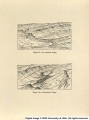
Show COUES ON GEOMYS AND THOMOMYS-OSTEOLOGY. Viewed in profile, the skull shows an almost perfectly straight dorsal outline from the occipital protuberance to a point just in advance of the orbits. Here is the highest point of the skull, whence the profile of the rostrum slopes gently downward, ending abruptly by vertical truncation. Likewise, the posterior or occipital outline is straight, or nearly so, and at a right angle with the superior surface. Likewise, again, the inferior surface of the skull, in all that part lying behind the pterygoids, presents a nearly straight and horizontal profile, at right angles with the occipital plane. Neither bulla ossea nor paroccipitai nor condyle is sufficiently developed to interfere with the straightness of outline and rectangularity which all the back part of the skull presents to the side view. The rest of the under outline of the skull consists of the palatal profile as a whole. This consists anteriorly of a deep (semi-oval) concavity; there is an abrupt rise from the incisive alveolus, and then a long gradual curve sloping far backward and downward to the molar alveolus; while the strong obliquity of set of the anterior molars protracts this same curve to the tips of the teeth. The molar alveolar border is very short, and rather oblique, being lowest behind. The enormous arched interval between the incisors and molars is highly characteristic, as is also the low position of the molars-the teeth dip below a line drawn from the tips of the incisors to the foramen magnum. Behind the palate, flange-like pterygoids slope up to the basi-occipital plane. In this view, the zygomata are seen to dip but slightly downward. Their point of greatest deflection lies high above a line drawn from the incisive alveolus to the occipital condyle-in fact, even above a line from the end of the nasal bones to the same point; at their lowest point, they are still on a level with the meatus, and they scarcely dip more than half-way from the top of the skull to the level of the molar crowns. For the rest, notable points of the profile view of the skull are the small size and peculiar position of the "anteorbital7' foramen, here situate low down and far forward in the maxillary, near its antero-inferior angle; a deep pit, but not perforation, behind the zygomatic plate of the maxillary; extensive lacerate foramina of exit of nerves entering the orbit from the brain ; similar fissured vacuities between the bulla ossea and the squamosal. The foreshortened tubular meatus is seen in the deep recess between the posterior root of the zygoma and the postero-inferior angle of the squamosal. |