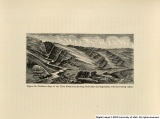
| OCR Text |
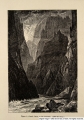
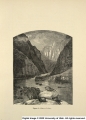
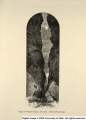
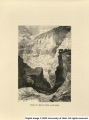
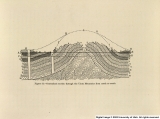
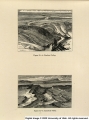
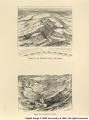
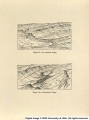
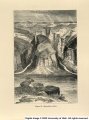
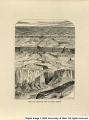
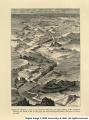
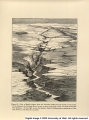
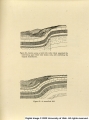
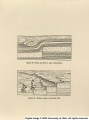
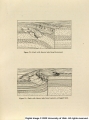
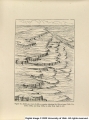
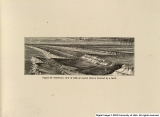
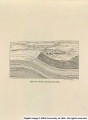
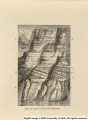
Show CHAPTER XII. ; THE PHYSICAL FEATURES OF THE VALLEY OF THE COLORADO, CONTINUED. In the previous chapter, I have made frequent mention of long lines of cliffs, or escarpments, extending across the Colorado, far back into the country on either side. I have attempted to explain the origin of these cliffs, as well as the origin of canons, as due to the erosion of greater or smaller folds of the stony formations, or beds of rock. To explain the chief characteristics of the Grand Cafion, and the adjacent country, it is necessary to describe other lines of cliffs, due to other causes. CLIFFS AND SLOPES OF DISPLACEMENT. The geological formations, or beds of rock, exposed in the Grand Canon and the tributary gorges, have been fractured, or folded, on an extensive scale. These great fractures, or folds, extend across the canon in a northerly and southerly direction, and can be traced for scores of miles on either side- not as huge cracks, or chasms, for they are observable only to the eye of the geologist, and are traced by the high steps and great displacements seen along their courses. Along these fractures we find what geologists call faults, i. e.j the beds have fallen down on one side of each crack. This displacement, or throw of the fault, Ss it is technically called, is from one or two hundred to two or three thousand feet, and is always noticed to be quite variable along any particular fault which may be studied. Let us try to obtain a well defined conception of such a fault. Suppose that a fracture should be formed, extending from the shore of Lake Erie, in the northwest corner of Pennsylvania, diagonally through the State to the head of Delaware Bay-a great crack, through the underlying rocks, to unknown depths below-and that the country on the southwestern side |