| OCR Text |
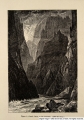
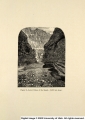
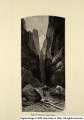
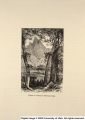
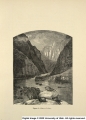
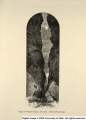
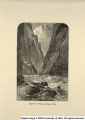
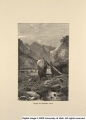
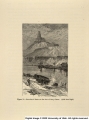
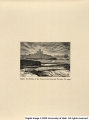
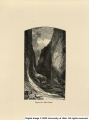
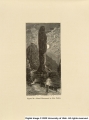
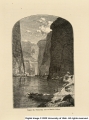
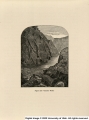
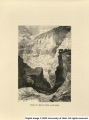
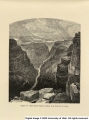
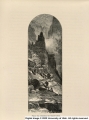
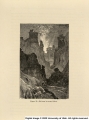
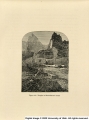
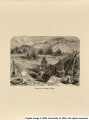
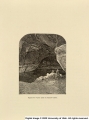
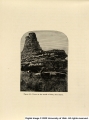
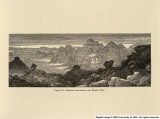
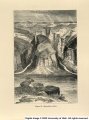
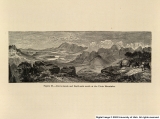
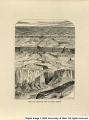
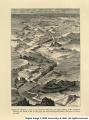
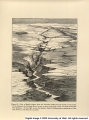
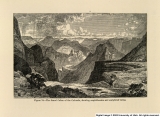
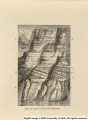
Show LIEUTENANT IVES ON THE GRAND CANON, 199 THE U-IN-KA-RET MOUNTAINS. The plateaus are yet modified in another way. Eruptive mountains, beds of black basalt, and volcanic cones are found here and there, and scoria and ashes are scattered over the land. There are three great, irregular mountains standing on the bench between the To-ro'-weap Fault and the Hurricane Ledge Fault. These great, complex masses of rock, or irregular mountains, are called by the Indians U-in-ka'-rets, (Pine Mountains.) Lieutenant Whipple, on the first of January, 1854, while making a reconnaissance for a railroad route to the Pacific Ocean, camped at a spring about thirty miles to the southwest of the San Francisco Mountain, to which he gave the name "New Year's Spring." From this elevated position on the plateau he looked north, and over the chasm, in the distance, 200 miles away, he saw these mountains. Perhaps he discovered but a single peak, but on the map of the country over which the reconnaissance was made, he has indicated these peaks, and called them "High Mountains." Probably he intended this as a provisional name only. In the winter of 1857-58, when Lieutenant Ives explored the Lower Colorado, he reached, with a boat, a point on the river about ten miles below the Rio Virgin, and about eighty miles below the Grand Canon. Being unable to proceed farther in his boat, a land expedition was organized, and he explored the plateaus to the south, descending to the mouth of Diamond Creek, as I have mentioned. His first view of the canon, and the great plateaus through which it is carved, was obtained April 3, 1858, and is thus described: uAt the end of ten miles the ridge of the swell was attained, and a splendid panorama burst suddenly into view. In the foreground were low table hills, intersected by numberless ravines; beyond these a lofty line of bluffs marked the edge of an immense canon; a wide gap was directly ahead, and through it were beheld, to the extreme limit of vision, vast plateaus, towering one above the other, thousands of feet in the air, the longv horizontal bands broken, at intervals, by wide and profound abysses, a* .1 extending a hundred miles to the north, till the deep azure blue faded into a light cerulean tint, that blended with the dome of the heavens. The famous Big Caiion was before us, and for a long time we paused in wonder- |