| OCR Text |
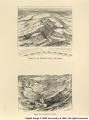
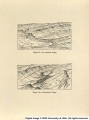
Show 270 EXPLORATION OF THE CANONS OF THE COLORADO. Viewed from behind, the occipital surface is seen to be nearly plane and vertical, with some beveling of the lateral (mastoid) portions. The most remarkable feature is the extent of this surface which is formed by the mastoid. In Geomys, &i any rate, the mastoids take as much part in the occipital surface as the occipital bone itself. The upper border of this surface is a nearly regular arch from one squamosal angle to the other. The lower outline is likewise a curve, with its convexity downward, but its regularity is broken by the nick of the foramen magpurn in the middle, the protuberance of the coridyles next, similar paroccipital processes next, and after a little interval the mastoid processes. Barring these irregularities of detail, the general occipital surface is elliptical in shape. In the middle, and nicking the lower limb of the ellipse, is the foramen magnum, nearly all of which is vertical, and consequently not foreshortened in this view. Viewed from below, the general contour is substantially like that presented from the opposite inspection, and we need only attend to details. The first feature is the incisive foramina-very small slits lying wTholly in the intermaxillary bones, yet nearer to the molars than to the incisors, so great is the production of the rostrum The palate proper,* i. e., the inter-molar portion, is extremely contracted, its width anteriorly being no greater than that of one of the molars. It widens a little backward. It is deeply twice furrowed, having a strong median ridge separating the furrows, and strong alveolar ridges on either hand. Posteriorly, there is a pair of deep pits extending to opposite the penultimate molars, and divided by a strong ridge. The palatal plate upon which these pits are constructed reaches considerably back of the molars in Geomys; less so in Thomomys. The general resemblance of the parts to some Arvicolince is strong. The pterygoids are thin, vertical, and somewhat circular plates, divaricating a little posteriorly, and abutting against the tips of the bulla ossea They appear like a bifurcation of the median palatal ridge just mentioned. The post-palatal parts being contracted, like the palate itself, and compressed into small space, it is not easy to fully appreciate the conformation of the parts, and still less so to describe it. Moreover, the lamellar pterygoids are often broken off in care-" * The long upward-sloping anterior part of palate is not "palate" at all. In life, it is altogether outside the mouth, like the superior incisors, and covered with furry skin. |