| OCR Text |
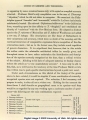
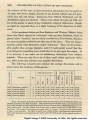
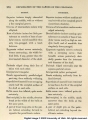
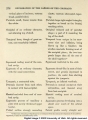
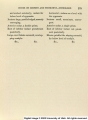
Show COUES ON GEOMYS AND THOMOMYS-OSTEOLOGY. Pterygoids --? (will be found differ- Pterygoids appearing like a bifurca-ing appreciably from those of Tho- tion into two thin diverging plates momys). of a single median vertical palatal plate. In like manner, we may proceed to compare some of the principal cranial characters of Geomyidce and Saccomyidce. Notwithstanding the unquestionably close affinity of these two families, which must stand next to each other in the system, their crania are curiously different in general appearance and details of contour. The discrepancies are, however, of a superficial character, resulting mainly from the extraordinary molding of the parts in Saccomyidce. In other words, it is a matter of mere shape, for the most part. There are, however, some curious and more essential features, of which the enormous inflation of various elements of the temporal bone and peculiar zygomatic relations posteriorly are the most remarkable. Probably, going into details, a hundred actual differences between the skulls of Geomyidce and SaccomyidcB might be enumerated. I shall content myself with tabulating a few of the more important of these. The comparisons are made between Geomys bursarius and Dipodomys ordi; it should be remembered, however, that the latter presents an extreme case, the average characters of the Saccomyidce being less different from those of Geomyidce. GEOMYIDJE. Skull massive, angular, in general like that of Arvicola, &c. Interorbital space the narrowest part of the skull-narrower than rostrum. Occipital region apprpaching a plane surface, without median emargina-tion. Nasal bones not produced beyond SACCOMYIDJE. Skull thin and papery, the corners rounded off; the resulting general shape peculiar. Interorbital space expanded, very much broader than the rostrum. Occipital region formed chiefly of enormous bulging mastoids, with deep median emargination. Nasal bones produced far beyond in- |