| OCR Text |
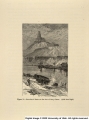
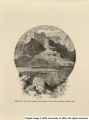
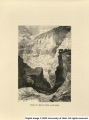
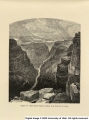
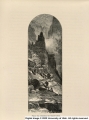
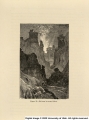
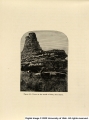
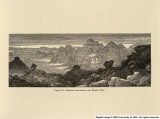
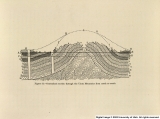
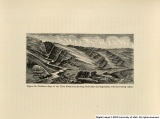
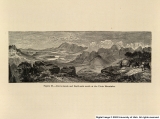
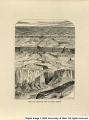
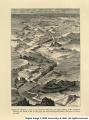
Show EXPLORATION OF THE CANONS OF THE COLORADO. ing delight, surveying the stupendous formation through which the Colorado and its tributaries break their way." «/ On the 12th of April he obtained another good view across the country to the north, ai*d, in his account of the day's journey, he makes this remark: "On the north side of the Colorado appeared a short range of mountains, close to the canon, which had been previously hidden by the intervening plateaus." On the map of the country embraced in this reconnaissance, a group of mountains are indicated, and called, by him, "North Side Mountains"-a name doubtless intended by him as provisional. They are the same as those mentioned by Lieutenant Whipple, and the same that we have described as standing on the bench between the To-ro'-weap Cliffs and the Hurricane Ledge. The Indian name U-irtrka'-rets has been adopted by the people who live in sight of the highest peaks, and so I have adopted the name which will doubtless live among those who use it daily. The most northern of these mountain masses I have called Mount Trumbull, the next Mount Logan, and the one standing nearest to the Grand Canon Mount Emma. The great mountain masses themselves are covered with volcanic cones, and groups of volcanic cones are scattered over the benches. Let us see how these mountains were formed. We have seen that the Uinta Mountains were not thrust up as peaks, but were carved from a vast, rounded block left by a retiring sea, or uplifted from the depths of the ocean, and its present forms are due to erosion! But these are volcanic cones. Have they, then, been built up as mountains? We shall see. The beds of sedimentary rocks, on which these mountains stand, run under the Vermilion Cliffs, to the north, and the beds seen in the Vermilion Cliffs at one time extended far away to the south, over this country and beyond the Grand Canon. Shales, sandstones, and limestones, several thousand feet in thickness, have been washed away from the summit of all these benches south of the cliffs. When this denudation commenced, there were no faults and no benches, and streams ran down from the north, heading in the Mar-ka'-gunt and Pauns-a'-gunt Plateaus, and found their way into the Colorado, and probably |