| OCR Text |
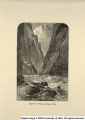
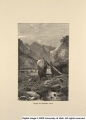
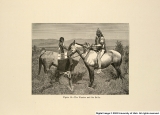
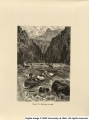
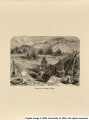
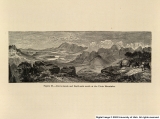
Show 48 EXPLORATION OF THE CANONS OF THE COLORADO. plateau being about eight thousand feet above the level of the sea, brings it into a region of moisture, as is well attested by the forests and grassy valleys. The plateau seems to rise gradually to the west, until it merges into the Wasatch Mountains. On these high table lands, eft: and deer abound; and they are favorite hunting grounds for the Ute Indians. A little before sunset, Howland and I meet again at the head of the side canon, and down we start. It is late, and we must make great haste, or be caught by the darkness; so we go, running where we can; leaping over the ledges; letting each other down on the loose rocks, as long as we can see. When darkness comes, we are still some distance from camp, and a long, slow, anxious descent we make, toward the gleaming camp fire. After supper, observations for latitude are taken, and only two or three hours for sleep remain, before daylight. July 11.-A short distance below camp we run a rapid, and, in doing so, break an oar, and then lose another, both belonging to the "Emma Dean." So the pioneer boat has but two oars. We see nothing of which oars can be made, so we conclude to run on to some point, where it seems possible to climb out to the forests on the plateau, and there we will procure suitable timber from which to make new ones. We soon approach another rapid. Standing on deck, I think it can be run, and on we go. Coming nearer, I see that at the foot it has a short turn to the left: where the waters pile up against the cliff. Here we try to land, but quickly discover that, being in swift water, above the fall, we cannot reach shore, crippled, as we are, by the loss of two oars; so the bow of the boat is turned down stream. We shoot by a big rock; a reflex wave rolls over our little boat and fills her. I see the place is dangerous, and quickly signal to the other boats to land where they can. This is scarcely completed when another wave rolls our boat over, and I am thrown some distance into the water. I soon find that swimming is very easy, and I cannot sink. It is only necessary to ply strokes sufficient to keep my head out of the water, though now and then, when a breaker rolls over me, I close my mouth, and am carried through it. The boat is drifting ahead of me twenty or thirty feet, and, when the great waves are passed, I overtake it, |