| OCR Text |
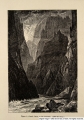
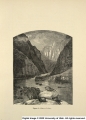
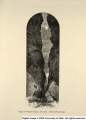
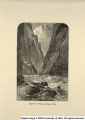
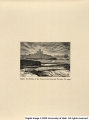
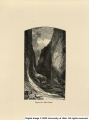
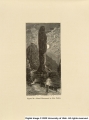
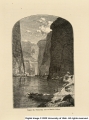
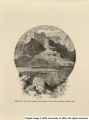
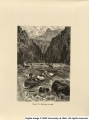
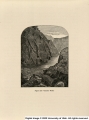
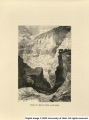
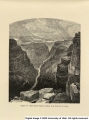
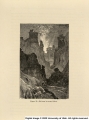
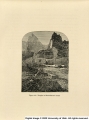
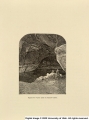
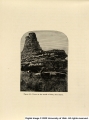
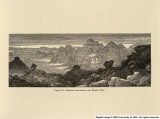
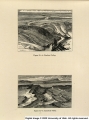
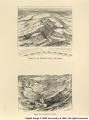
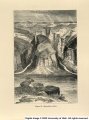
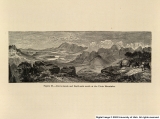
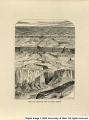
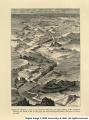
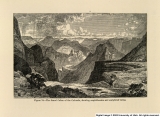
Show 68 EXPLORATION OF THE CANONS OF THE COLORADO. down through a very narrow canon, and beyond it, to the southwest, there is a long line of cliffs, with a broad terrace, or bench, between it and the brink of the canon, and beyond these cliffs is situated the range of mountains seen as we came down Narrow Canon. Looking up the Colorado, the chasm through which it runs can be seen, but we cannot look down on its waters. The whole country is a region of naked rock> of many colors, with cliffs and buttes about us, and towering mountains in the distance. l July 29.-We enter a canon to-day, with low, red walls. A short distance below its head we discover the ruins of an old building, on the left wall. There is a narrow plain between the river and the wall just here, and on the brink of a rock two hundred feet high stands this old house. Its walls are of stone, laid in mortar, with much regularity. It was probably built three stories high; the lower story is yet almost intact; the second is much broken down, and scarcely anything is left of the third. Great quantities of flint chips are found on the rocks near by, and many arrow heads, some perfect, others broken; and fragments of pottery are strewn about in great profusion. On the face of the cliff, under the building, and along down the river, for two or three hundred yards, there are many etchings. Two hours are given to the examination of these interesting ruins, then we run down fifteen miles farther, and discover another group. The principal building was situated on the summit of the hill. A part of the walls are standing, to the height of eight or ten feet, and the mortar yet remains, in some places. The house was in the shape of an L, with five rooms on the ground floor, one in the angle, and two in each extension. In the space in the angle, there is a deep excavation. From what we know of the people in the province of Tusayan, who are, doubtless, of the same race as the former inhabitants of these ruins, we conclude that this was a "kiva," or underground chamber, in which their religious ceremonies were performed. We leave these ruins, and run down two or three miles, and go into camp about mid-afternoon. And now I climb the wall and go out into the back country for a walk. The sandstone, through which the canon is cut, is red and homogeneous, being the same as that through which Labyrinth Canon runs. The smooth, |