| OCR Text |
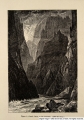
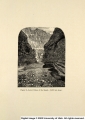
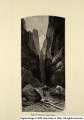
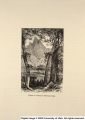
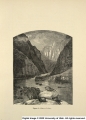
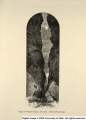
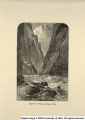
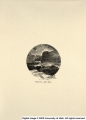
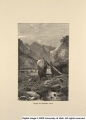
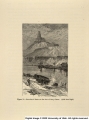
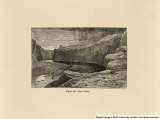
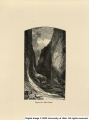
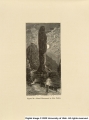
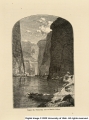
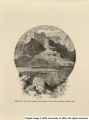
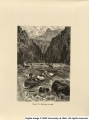
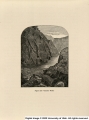
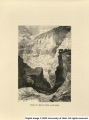
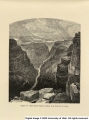
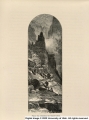
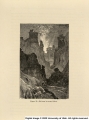
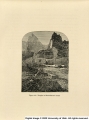
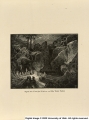
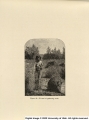
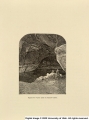
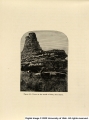
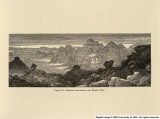
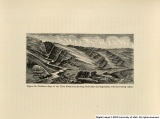
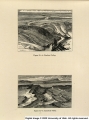
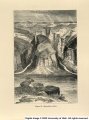
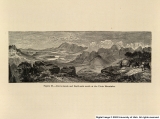
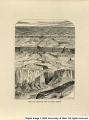
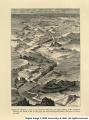
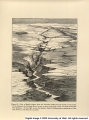
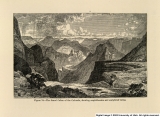
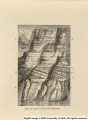
Show NARROW CANON. 67 than we have ever known it. The water fills it from wall to wall, giving us no landing place at the foot of the cliff; the river is very swift, the canon is very tortuous, so that we can see but a few hundred yards ahead; the walls tower over us, often overhanging so as to almost shut out the light. I stand on deck, watching with intense anxiety, lest this may lead us into some danger; but we glide along, with no obstruction, no falls, no rocks, and, in a mile and a half, emerge from the narrow gorge into a more open and broken portion of the canon. Now that it is past, it seems a very simple thing indeed to run through such a place, but the fear of what might be ahead made a deep impression on us. . At three o'clock we arrive at the foot of Cataract Canon. Here a loner o canon valley comes down from the east, and the river turns sharply to the west in a continuation of the line of the lateral valley. In the bend on the right, vast numbers of crags, and pinnacles, and tower shaped rocks are seen. We call it Mille Crag Bend. And now we wheel into another canon, on swift water, unobstructed by rocks. This new canon is very narrow and very straight, with walls vertical below and terraced above. The brink of the cliff is 1,300 feet above the water, where we enter it, but the rocks dip to the west, and, as the course of the canon is in that direction, the walls are seen to slowly decrease in altitude. Floating down this narrow channel, and looking out through the canon crevice away in the distance, the river is seen to turn again to the left, and beyond this point, away many miles, a great mountain is seen. Still floating down, we see other mountains, now to the right, now on the left, until a great mountain range is unfolded to view. We name this Narrow Canon, and it terminates at the bend of the river below. As we go down to this point, we discover the mouth of a stream, which enters from the right. Into this our little boat is turned. One of the men in the boat following, seeing what we have done, shouts to Dunn, asking if it is a trout-stream. Dunn replies, much disgusted, that it is "a dirty devil," and by this name the river is to be known hereafter. The water is exceedingly muddy, and has an unpleasant odor. Some of us go out for half a mile, and climb a butte to the north. The course of the Dirty Devil Eiver can be traced for many miles. It comes |