| OCR Text |
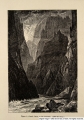
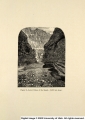
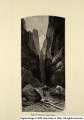
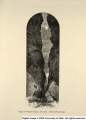
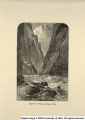
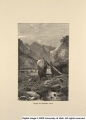
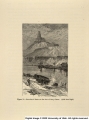
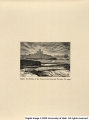
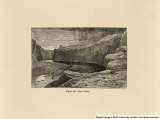
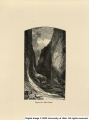
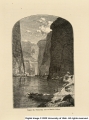
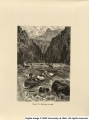
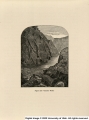
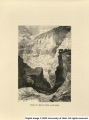
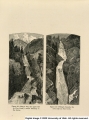
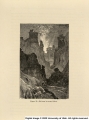
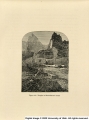
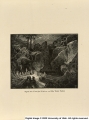
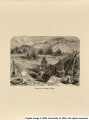
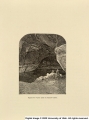
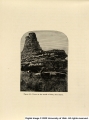
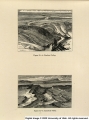
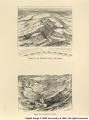
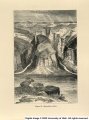
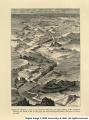
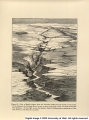
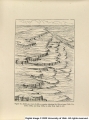
Show 28 EXPLORATION OF THE CANONS OF THE COLORADO. narrow channel, against the right-hand cliff, and falls fifteen feet in ten yards; at the second, we have a broad sheet of water, tumbling down twenty feet over a group of rocks that thrust their dark heads through the foaming waters. The third is a broken fall, or short, abrupt rapid, where the water makes a descent of more than twenty feet among huge, fallen fragments of the cliff. We name the group Triplet Falls. We make a portage around the first; past the second and third we let down with lines. During the afternoon, Dunn and Howland, having returned from their climb, we run down, three-quarters of a mile, on quiet water, and land at the head of another fall. On examination, we find that there is an abrupt plunge of a few feet, and then the river tumbles, for half a mile, with a descent of a hundred feet, in a channel beset with great numbers of huge bowlders. This stretch of the river is named Hell's Half-Mile. The remaining portion of the day is occupied in making a trail among the rocks to the foot of the rapid. June 16.-Our first work this morning is to carry our cargoes to the foot of the falls. Then we commence letting down the boats. We take two of them down in safety, but not without great difficulty; for, where such a vast body of water, rolling down an inclined plane, is broken into eddies and cross currents by rocks projecting from the cliffs and piles of boulders in the channel, it requires excessive labor and much care to prevent their being dashed against the rocks or breaking away. Sometimes we are compelled to hold the boat against a rock, above a chute, until a second line, attached to the stem, is carried to some point below, and, when all is ready the first line is detached, and the boat given to the current, when she shoots down, and the men below swing her into some eddy. At such a place, we are letting down the last boat, and, as she is set free, a wave turns her broadside down the stream, with the stem, to which the line is attached, from shore, and a little up. They haul on the line to bring the boat in, but the powQr of the current, striking obliquely against her, shoots her out into the middle of the river. The men have their hands burned with the friction of the passing line; the boat breaks away, speeds, with great velocity, down the stream. |