| OCR Text |
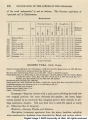
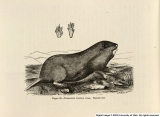
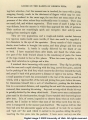
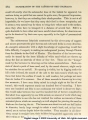
Show COUES ON GEOMYS AND THOMOMYS - T. TALPOIDES. 251 Geomys townscndii, "KiCH. MSS."-BACHM., Journ. Acad. Nat. Sci. Phila. 1839, 105. ("Columbia R." Described as distinct from "borealis," with much hesitation, entirely in deference to, Richardson.)-RICH., Zool. Voy. Blossom, 1839, p. 12*.-DEKAY, N. Y. Fn. 1842, 92. (Compiled from Bachman.)-SCHINZ, Synop. Mamm. ii, 1845, 137. (Compiled.) Ascomys townsendii, WAGN., Suppl. Schreb. Hi, 1843, 391. " Geomys unisulcatus, GRAY, Br. Mus."-GRAY, I. c. Thomomys rufescens, MAXIM., Nov. Act. Acad. Cses.-Leop. xix, pt. i, 1839, 3S3; Arch. f. Naturg. 1841, pt. ii, 42 ; ibid. 1861, -; Verz. Sang. N.-Am. Reise, 1862, 149, pi. 4, f. 5 (penis-bone). (In the last quotation, the generic name is spelled "Tomomys.") (Missouri region.)-SCHINZ, Synop. Mamm. ii, 1845, 134 (exclusive of the synonym Oryctomys Notice, Eyd. & Gerv.). (Compiled from Maximilian ; California erroneously assigned as the locality.)-BAIRD, Proc. Acad. Nat. Sci. Phila. vii, 1855, 335; M. N. A. 1857, 397. (Redescription of specimens from "Nebraska/' i. e., Dakota ; Forts Pierre, Randall, and Union.)-BAIKD, P. R. R. Rep. x, 1859, Gunuison's and Beckwith's Routes, Mamm. p. 8, pi. 10, f. 1 (the same).-STEVENSON, U". S. Geol. Surv. Terr, for 1870, 1871, 462 (Wyoming).-AMES, Bull. Minn. Acad. i, 1874, 70 (catalogued upon presumption of its occurrence in Minnesota).-ALLEN, Proc. Bost. Soc. xvij, 1874, 43 (Yellowstone River); Bull. Ess. Inst. vi, 1874, 56, 61, 65 (rather supposed than known to be this species). Oeomys rufescens, LECONTE, Proc. Acad. Nat. Sci. Phila. vi, 1852,161. (Redescribed from types of " bore-alis" and " townsendii," in Philadelphia Academy, marked u Columbia River.") Ascomys rufescens, WAGN., Suppl. Schreb. iii, 1843, 387. Geomys (Thomomys) rufescens, GIEBEL, Saug. 1855, 530. Thomowys "fulvus", MERR., U. S. Geol. Surv. Terr, for 1872, 1873, 665. (Nee Woodh.-Err. test, specim. ipsis.) DIAGNOSIS.-Coloration almost exactly that of the house-rat (Mas decu-manus)-sometimes assuming a more reddish phase, occasionally blackish-plumbeous ; tail and feet white, and much of the chin, throat, and breast white in irregular patches, where the fur is white to the base. No sooty-blackish about the mouth-parts; no obvious distinction in color between the pouch and its surroundings ; no strongly-pronounced reddish-brown on the under parts ; general tone of coloration never decidedly tawny. Ears set in a small blackish area. Length 6 to 8 inches; tail 3 inches or less, decidedly less than half the length of head and body ; fore and hind feet (claws included) approximately equal to each other, about 1.25; longest fore claw little less than the length of the rest of the hand, about 0.50. HABITAT.-Supposed to occur in the Interior of North America, from "Hudson's Bay" to the "Columbia River", and to occupy about the northern half of the United States west of the Mississippi, exclusive of the Pacific-coast region ; being replaced, to the west, by T.bulbivorus, and, to the south, by T. umbrinus. Undoubted specimens seen from Selkirk Settlement, British America; from Minnesota westward along the parallel of 49° N. to the Rocky Mountains, and from Idaho, Wyoming, Utah, and Nevada. Description (from a series of skins taken by myself along the northern |