| OCR Text |
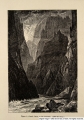
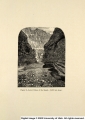
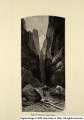
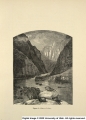
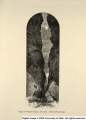
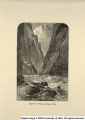
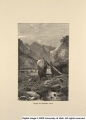
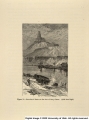
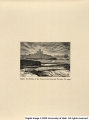
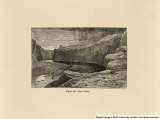
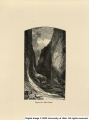
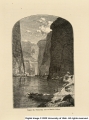
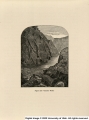
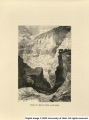
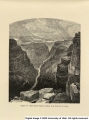
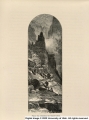
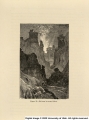
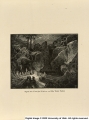
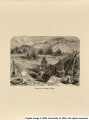
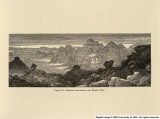
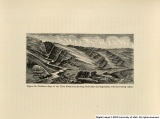
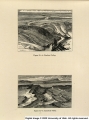
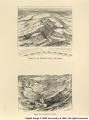
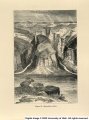
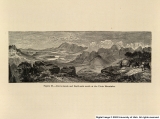
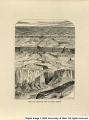
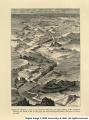
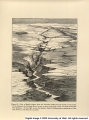
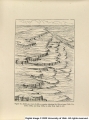
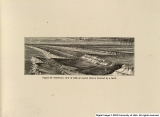
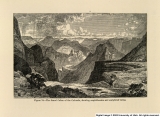
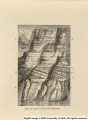
Show 138 EXPLORATION OF THE CANONS OF THE COLORADO. sandstone rock, traversed in all directions by a perfect labyrinth of narrow gorges, sometimes seeming to cross each other, but finally uniting in a principal one, whose black line could be traced, cutting its way to the Colorado, a few miles above the mouth of the San Juan Eiver. The perilous character of the journey of Mr. Hamblin and party was apparent. For eighty miles they traveled in a canon, finding, in all that distance, but two places where the walls could be scaled. They crossed, recrossed, waded, and sometimes swam a rapid stream, that often filled the gorge from wall to wall. A single shower, on the rock land above, would fiave changed the stream to a raging torrent, that would have swept them into the Colorado, or imprisoned them in some rock walled alcove, with no possible way of escape. Away to the east, and fifty miles distant, rose the Henry Mountains, their gray slopes streaked with long lines of white by the snow which yet remained in the gulches near their summits. On our voyage down the Colorado River, in 1871, we had determined the mouth of the Dirty Devil Eiver to be about thirty miles northeast from these mountains, making it at least eighty miles from our present camp, and directly across the net work of canons before us, To proceed farther in the direction we had been pursuing was impossible. No animal without wings could cross the deep gulches in the sandstone basin at our feet. The stream which we had followed, and whose course soon became lost in the multitude of chasms before us, was not the one we were in search of, but an unknown, unnamed river, draining the eastern slope of the Aquarius Plateau, and flowing, through a deep? narrow canon, to the Colorado Eiver. Believing our party to be the discov.-erers, we decided to call this stream, in honor of Father Escalarite, the old Spanish explorer, Escalante Eiver, and the country which it drains, Esca-lante Basin. The western boundary of the basin is the vertical wall forming the eastern edge of the Kai-par'-o-wits Plateau. From the very base of this cliff, the drainage is to the Escalante Eiver, by narrow, deep canons, presenting apparently impassable barriers to travel toward the south. To the north, and twenty miles away, rose the eastern slope of the Aquarius Plateau. Its general trend is north and south, but away to the northwest, and about forty |