| OCR Text |
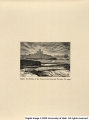
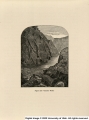
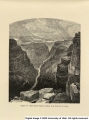
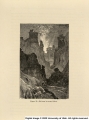
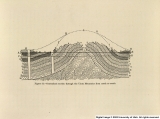
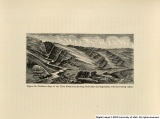
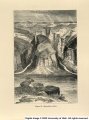
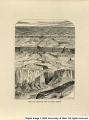
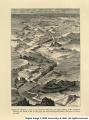
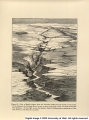
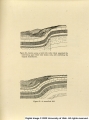
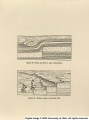
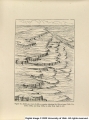
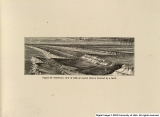
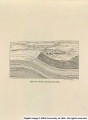
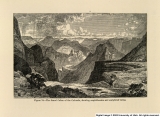
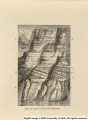
Show KAIBAB PLATEAU. 185 fault, especially where the throw is great arid the rocks are indurated, produces precipitous cliffs, with a small talus below, made of the fragments which have fallen from above. Where the down-fallen rocks -have caught and have been flexed, we usually find a long slope at the foot of the cliffs, and where the faults change into flexures gentle slopes are observed, stretching from the high lands to the lower country. The elevated district traversed by the Grand Cknon is broken by a number of such faults, and portions of the country have fallen down, so that, although the general upper surface is formed, in chief part, of the same beds of cherty limestone, the canon is not cut through one great, unbroken plateau, but through a series of plateaus, or great geographic terraces and tables. »" • The most elevated portion of the country is a central belt, about twenty five or thirty miles in width, and about eighty miles in length. This is called, by the Indians, Kaibab, or "mountain lying down," and we have adopted the name. It is well defined on the east and west by lines of cliffs and steep slopes, which have been formed by displacements, and on the south by the chasm of the Colorado, but on the north it abuts against the Vermilion Cliffs. The lines of cliffs which form its eastern and western boundaries extend to the south beyond the Grand Canon, for the faults run far to the south, and they define there, in part, a companion, or twin plateau. Had there been no river running there, there would have been but one plateau. From this central belt the general surface of the country drops by steps to the east and west, and the edge of each step marks the line of a fault, or its equivalent fold. In the region under discussion there are six of these great displacements, which giVe rise to important elements in the topography, and deserve special mention. I shall enumerate them in order, from east to west, omitting mention of the faults and folds of minor importance. East of Marble Canon, and running in a general northerly and southerly course, so as to cross the Colorado at the mouth of the Paria, we have the Paria Fold, in which the down-fall of the rocky foundation is to the |