| OCR Text |
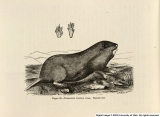
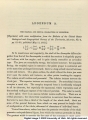
Show 236 EXPLORATION OF THE CANONS OF THE COLORADO. GEOMYS MEXICANUS, (ticht.) Lee. Ascomys mexicanus, LIGHT., Abhand. K. Acad. Wiss. Berl. 1827,113.-BRANTS, Muizen, 1827, 27.-WAGN., Sup.pl. Schreb. iii, 1843, 384; iv, pi. 206 A.-CHARLESW., P. Z. S. ix, 1841, 60.-SCHINZ, Synop. ii, 1845, 133. Saccophorus mexicanus, FISCH., Synop. 1829, 305.-EYB. & GERV., Gue'rin Mag. vi, 1836, 23, pi. 21, f. 5, 6 ; Voy. Favorite, v, 1839; 23, pi. 8, f. 5, 6.-RICH., Rep. Brit. Assoc. vi, 1836, 156.-GRAY, List Mamm. Br. Mns. 1843,150.-GERR., Cat. Bones Br. Mus. 1862, 223. Pseudostoma (Geomys) mexicana, AUD. & BACH., Q. N. A. iii, 1854, 309. Geomys mexicanus, LEC., Proc. Acad. Nat. Sci. Phila. 1852, 160.-BAIRD,M. N. A. 1857, 387. Geomys (Saccophorus) mexicanus, GIEB., Saug. 1855, 529. Tucan of HERNANDEZ.-Tuca or Tuza, MEXICAN.-Tugan apud GERR., I. c. Mexicanische Taschenmaus, GERMAN. DIAGNOSIS.-Superior incisors bisected by a single median furrow (as in G. castanops, which is very different in color). Coloration and general appearance of G. bursarius (which has two distinct grooves on the upper incisors). Fur soft, sleek, as in other species of the genus (excepting G. hispidus, where it is extremely coarse and harsh). Averaging much larger than any United States species (nearly equaling G. hispidus), with proportionally smaller pouches and hands, and weaker claws (these parts being as in G. hispidus}. Tail and feet clothed (as usual in the genus), not naked as in G. hispidus and G. tuza. * HABITAT.-Mexico. J Description (No. 3523, Xalapa, De Oca, skin).-The general appearance of this animal is so exactly that of an overgrown or overstuffed specimen of ordinary bursarius, that I should be at a loss for terms referring to color to precisely characterize it. It is, nevertheless, entirely distinct from this or any other species. It shares, with G. castanops, the single median* furrow of the upper incisors, and some other points of form; but it is much larger, and altogether of a different color. The excellently well-prepared and not over-stuffed specimen here described is only equaled in a large series of G. bursarius by a single much overstuffed example. The dimensions cannot be given with entire accuracy; but the species probably averages, when full- *Cr. hispidus has been described as having a single median furrow ; the emphasis here, however, is upon " single," in antithesis to the double furrow of G. bursarius, without reference to exact position. G. tuza is said to have a "single" furrow; but the proper implication is merely obsoleteness of the fine inner second furrow usually seen. In G. mexicanus, as in G. castanops, the furrow is truly single and median; in G. hispidus, single and internal; in G. tuza, apparently single and external. |