| OCR Text |
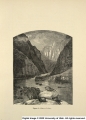
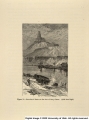
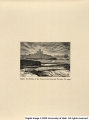
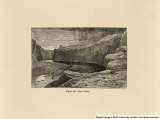
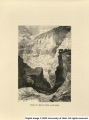
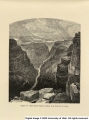
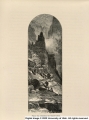
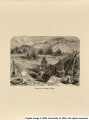
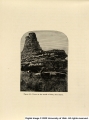
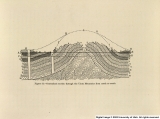
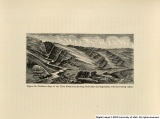
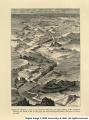
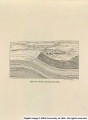
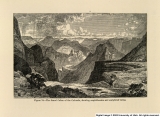
Show THE LAND OF STANDING ROCKS. 175 sail down from distant mountains, and make their homes upon the trees; grouse feed on the pine nuts, and birds and beasts have a home from which they rarely wander to the desert lands below. Among the buttes on the lower terraces rattlesnakes crawl, lizards glide over the rocks, tarantulas stagger about, and red ants build their play house mountains. Sometimes rabbits are seen, and wolves prowl in their quest; but the desert has no bird of sweet song, and no beast of noble mien. THE TOOM'-PIN WU-NEAR' TU-WEAP'. We now proceed to the discussion of Stillwater Canon, Cataract Canon, and Narrow Canon, and the region of country adjacent thereto. At the head of Stillwater Canon the river turns to a more easterly course, and runs into a fold, which has a northeast and southwest axis, but its central line is never reached. Before coming to it the river turns again to the west, and runs entirely out of the fold, at the mouth of the Dirty Devil River. It will thus be seen that the dip of the formations under discussion is to the northwest. Going down to the middle of Cataract Canon, we constantly see rocks of lower geological position appearing at the water's edge; and, still continuing from that point to the foot of Narrow Canon, the same beds are observed in reverse order; that is, we see at the water's edge rocks of later geological age. Where the upturned axis of this fold is situated is not known; but, looking away to the southeast, mountains are seen-the Sierra La Sal and Sierra Abajo. Looking over the general surface of the country, it appears that the course of the river is from lower into higher lands, and then back again. Observing the present topographic features of the country, it seems strange that it did not find its way directly across from the foot of Labyrinth to the foot of Narrow Canon, following the low lands. Why should it leave this lower region, and run away out into the slope of a system of mountains, and then return? We must remember that the river is older than the mountains and the cliffs. We must not think of a great district of country, over which mountains were piled, or built, or heaved up, and that when rain fell it gathered into streams along the natural depressions of such a country, and thus attempt to account for the course of the river; but we must under- |