| OCR Text |
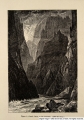
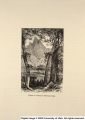
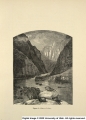
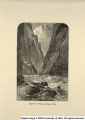
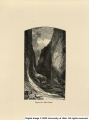
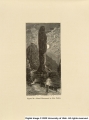
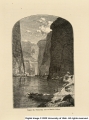
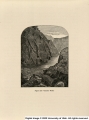
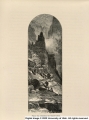
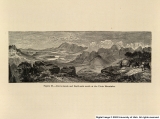
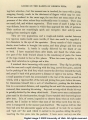
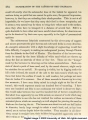
Show CHAPTER 1. THE VALLEY OF THE COLORADO. The Colorado River is formed by the junction of the Grand and Green. The Grand River has its source in the Rocky Mountains, five or six miles west of Long's Peak, in latitude 40° 17' and longitude 105° 43' approximately. A group of little alpine lakes, that receive their waters directly from perpetual snow-banks, discharge into a common reservoir, known as Grand Lake, a beautiful sheet of water. Its quiet surface reflects towering cliffs and crags of granite on its eastern shore; and stately pines and firs stand on its western margin. The Green River heads near Fr&nonfs Peak, in the Wind River Mountains, in latitude 43° 15' and longitude 109° 45' approximately. This river, like the last, has its sources in alpine lakes, fed by everlasting snows. Thousands of these little lakes, with deep, cold, emerald waters, are embosomed among the crags of the Rocky Mountains. These streams, born in the cold, gloomy solitudes of the upper mountain-region, have a strange, eventful history as they pass down through gorges, tumbling in cascades and cataracts, until they reach the hot, arid plains of the Lower Colorado, where the waters that were so clear above empty as turbid floods into the Gulf of California. The mouth of the Colorado is in latitude 31° 53' and longitude 115°. The Green River is larger than the Grand, and is the upper continuation of the Colorado. Including this river, the whole length of the stream is about two thousand miles. The region of country drained by the Colorado and its tributaries is about eight hundred miles in length, and varies from three hundred to five hundred in width, containing about three hundred thousand square miles, an area larger than all the New England and Middle States, with Maryland and Virginia added, or as large as Minnesota, Wisconsin, Iowa, Illinois, and Missouri. There are two distinct portions of the ba.sin of the Colorado. The |