| OCR Text |
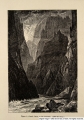
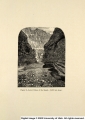
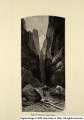
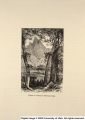
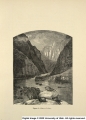
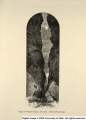
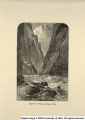
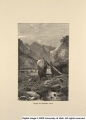
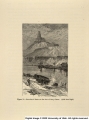
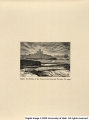
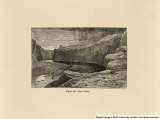
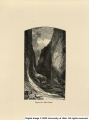
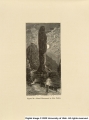
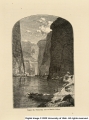
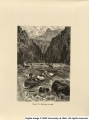
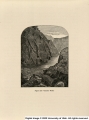
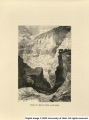
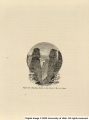
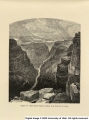
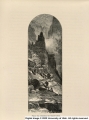
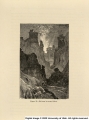
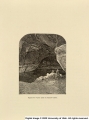
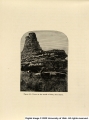
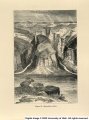
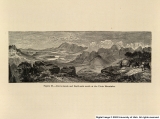
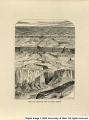
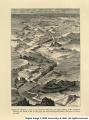
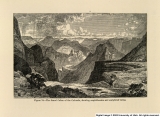
Show CLIMBING THE CLIFFS. 35 - June 20. This morning two of the men take me up the Yampa for a short distance, and I go out to climb. Having reached the top of the canon, I walk over long stretches of naked sandstone, crossing gulches now and then, and by noon reach the summit of Mount Dawes. From this point I can look away to the north, and see in the dim distance the Sweetwater and Wind River Mountains, more than a hundred miles away. To the northwest, the Wasatch Mountains are in view and peaks of the Uinta. To the east, I can see the western slopes of the Rocky Mountains, more than a hundred and fifty miles distant. The air is singularly clear to day; mountains and buttes stand in sharp outline, valleys stretch out in the perspective, and I can look down into the deep canon gorges and see gleaming waters. Descending, I cross to a ridge near the brink of the canon of Lodore, the highest point of which is nearly as high as the last mentioned mountain. Late in the afternoon I stand on this elevated point, and discover a monument that has evidently been built by human hands. A few plants are growing in the joints between the rocks, and all are lichened over to a greater or less extent, showing evidences that the pile was built a long time ago. This line of peaks, the eastern extension of the Uinta Mountains, has received the name of Sierra Escalanti, in honor of a Spanish priest, who traveled in this region of country nearly a century ago; and, perchance, the reverend father built this monument. Now I return to the river and discharge my gun, as a signal for the boat to come and take me down to camp. While we have been in the park, the men have succeeded in catching quite a number of fish, and we have an abundant supply. This is quite an addition to our cuisine. June 21.-We float around the long rock, and enter another canon. The walls are high and vertical; the canon is narrow; and the river fills the whole space below, so that there is no landing-place at the foot of the cliff. The Green is greatly increased by the Yampa, and we now have a much larger river. All this volume of water, confined, as it is, in a narrow channel, and rushing with great velocity, is set eddying and spinning in whirlpools by projecting rocks and short curves, and the waters waltz their way through the cation, making their own rippling, rushing, roaring music. The |