| OCR Text |
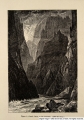
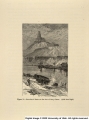
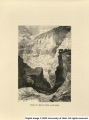
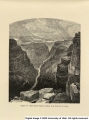
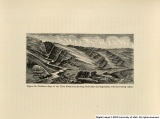
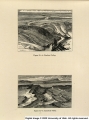
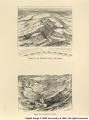
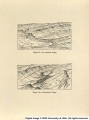
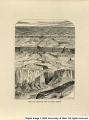
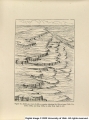
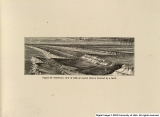
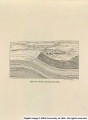
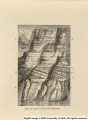
Show 210 EXPLORATION OF THE CANONS OF THE COLORADO. evidences that the lines of cliffs themselves have been carried back for great distances as cliffs by undermining, which is a process carried on only in an arid region. The evidence is of this character. I have stated that the drainage of the inclined plateaus is usually from the brink of the cliffs backward; i. e.7 the water falling on the plateau does not find its way immediately over the cliffs, but runs from the very brink or edge of the plateau back toward the middle or farther side, which is usually found against the foot of another line of cliffs, and here the waters are turned toward some greater channel, which runs against the dip and cuts through the cliffs. Now the water-ways at the heads of these streams that have their sources near the brink of the cliffs would always be small, shallow, and ramifying into many minute branches if the line of cliffs were a fixed or immovable line, but we often find that the cliffs have been carried back by the undermining process until all these minute ramifications have been cut off; and we find cations opening on the faces of the cliffs, the waters of which run backward as above described. Let us suppose that we have a line of cliffs with an escarpment facing the south. The rain, falling on the escarpment and in the region south of the cliffs, would run toward the south or along the foot of the cliffs until it reached some more important water channel; the rain falling on the plateau, from the brink of the cliffs backward, would run toward the north, and the waters falling on this upper region would excavate channels for themselves, and, under proper conditions, canons would be cut. As the cliffs are undermined and this line carried back into the plateau, the area with a southern drainage would be increased, the area with a northern drainage correspondingly diminished, and, when the process had continued for a sufficient length of time, we would find the southern edge of the plateau carried away by this undermining process, until all the heads of the streams were cut off and until the line had reached the canons. Gradually, during the progress of erosion, the excavation of the bottom of the canons would cease, as the supply of water running through them would be cut off, and such canons would have to be considered as comparatively ancient. Such facts are frequently observed in this canon and cliff country. From such considerations, it seems that we may safely conclude that |