| OCR Text |
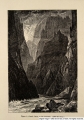
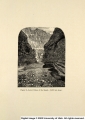
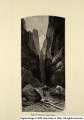
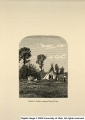
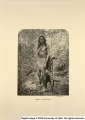
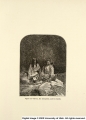
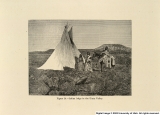
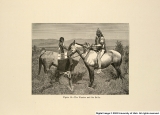
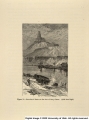
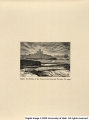
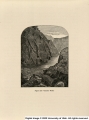
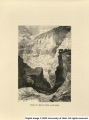
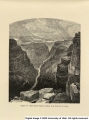
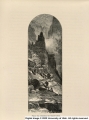
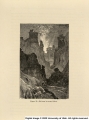
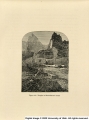
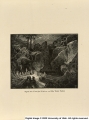
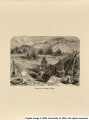
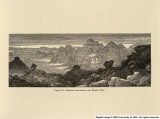
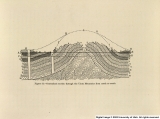
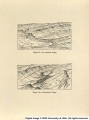
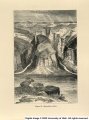
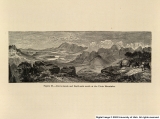
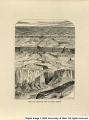
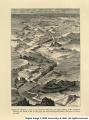
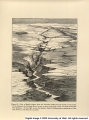
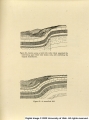
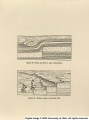
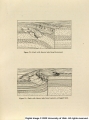
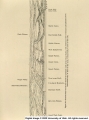
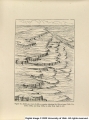
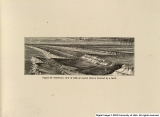
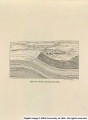
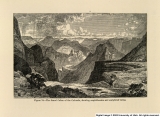
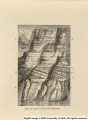
Show 188 EXPLORATION OF THE CANONS OF THE COLORADO. there it Is cut by narrow cafions or gulches, which may be ascended, and in two or three places volcanoes^ standing on the plateau above, have poured out streams of lava, that have run over this wall in rugged slopes, which can be climbed with difficulty. Then we pass on to the east, winding among volcanic cones, and in many places walking over sheets of cooled basalt and beds of cinders, until we reach the foot of the To-ro'-weap Cliffs. Here we have another wall 800 feet high to climb. Still passing to the east, by a difficult way, crossing canons and gulches, at last we reach the western foot of the Kaibab Plateau, and again climb 2,000 feet to its summit, where we are 8,000 feet above the level of the sea. To the south, we can see the Grand Canon of the Colorado ; its meandering course can be traced for two hundred miles; far away to the north, we see the ragged lines of Vermillion Cliff, an escarpment due to erosion. On to the east, for thirty miles, and we reach the eastern brink of the Kaibab Plateau. Descending 1,500 feet, we have a bench three or four miles wide, and make a second descent of fifteen hundred or eighteen hundred feet, when we reach the eastern foot of the plateau, and stand on the plain above Marble Canon. To the south, these eastern Kaibab steps have escarpments, as the displacements are by faults. To the north, they have slopes, as the displacements are by folds. Then we cross the plain, and still go on to the east for a distance of thirty five or forty miles, and reach the foot of a line of cliffs facing the west once more. ' Climbing this, we find it to be a sharp ridge, with a face also turned to the east, so that we have two lines of cliffs or escarpments, one facing the east, the other the west, brought so close together as to form a sharp ridge. The eastern face is due to erosion; the western face to displacement by folding. I shall hereafter discuss this ridge in a more elaborate manner. The Grand Wash Valley is a desert of broken rocks and naked sands. There are two or three springs in the valley, and here squalid Indians live, in a region so warm and so arid, that they are not compelled to build themselves even shelter of bark and boughs, but wallow in the sand or seek the shade of the few scrubby cedars that grow from the crevices of the rocks. |