| OCR Text |
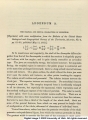
Show ADDENDUM A. THE CRANIAL AND DENTAL CHAEACTEKS OF GEOMYIDJE. [Reprinted, with some modification, from the Bulletin of the United States Geological and Geographical Survey of the Territories, 2d series, .Afo. 2, pp. 81-90, published May 11, 1875.] •'l-l' U-0' 4-4'-5-5-10 In its massiveness and angularity, the skull of the Geomyidce differs altogether from that of the Saccomyidce, in which the cranium is singularly papery and bullous, with few angles; and it quite closely resembles an arvicoline type. The jaws are remarkably strong ; the incisors immense ; the zygomata flaring; the occipital region is extensive; the palate proper is contracted and at the same time prolonged downward ; there is a long arched interval between molars and incisors. On a plane surface, the skull without the lower jaw rests level upon the molars and incisors; no other points touching the support. The molars are all rootless and perennial The inferior incisors traverse the whole jaw. The superior incisors are semicircular. No anteorbital foramen occupies a usual site. The complex temporal bone is inordinately enlarged in all its elements, but especially the squamosal, which represents most of the cerebral roofing at ex'pense of the reduced parietals. The malar is merely a short splint; there is an osseous tubular meatus auditorius. There are no orbital processes ; the interorbital constriction is narrower than the rostrum ; the latter is more than a third of the length of the whole skull. Such are some of the general features, from which we may proceed to details - first of configuration of the whole, afterward of characters of individual bones. Viewed from above, rather less than the posterior two-thirds of the skull presents a subquadrilateral figure, from which the rostrum protrudes in front. The greatest width is opposite the fore part of the zygomata in most cases |