| OCR Text |
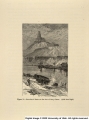
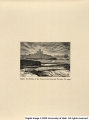
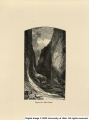
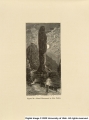
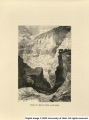
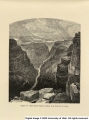
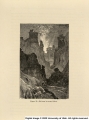
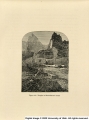
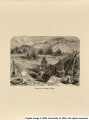
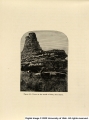
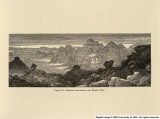
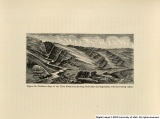
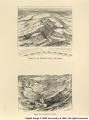
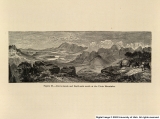
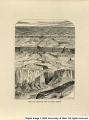
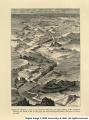
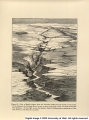
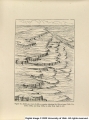
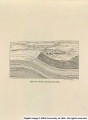
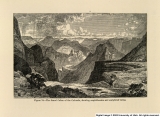
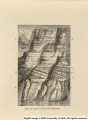
Show 176 EXPLORATION OF THE CANONS OF THE COLORADO. stand that the river cut its way through a region that was slowly rising above the level of the sea, and the rain washed out the valleys, and left rocks and cliffs standing, and the river never turned aside from its original course to seek an easier way, for the progress of uplifting was not greater than that of corrasion. Again we see how slowly the dry land has emerged from the sea; no great convulsion of nature, but steady progress. The Orange Cliffs, which terminate Labyrinth Canon, extend to the west a few miles, and then change their course to the southwest, running parallel with the axis of the fold we are now discussing, and they cross the Dirty Devil a few miles above its mouth. Thus they are seen, like the 'other lines of cliffs, to face the axis of a fold. Figure 62 is a bird's-eye view,of this country, showing the course of the river through Stillwater, Cataract, and Narrow Canons. It represents the cutting of the stream into the slope of a mountain range, and out of it again, without crossing the range. On the left it shows two lines of cliffs. Here we have a district inclosed within Titanic walls. On the southeast are great mountains, and from the foot of their slope, on the north side, neai* Grand River, we find a line of cliffs crossing this stream, and extending to the Green, in a westerly direction; then to the southwest, to the Dirty Devil River, and then broken and confused by buttes and canon walls, which extend toward the east, until it strikes the southern foot of the mountains. Within this walled area a profound gorge-Cataract Canon-is seen, with Stillwater Caiion above, and Narrow Canon below. The lower canon of the Grand is also seen, and a number of lateral canons. Along the general slope of the district between the canons are vast numbers of buttes. Their origin is the same as that of the buttes previously described. Often they are but monuments, or standing columns of rocks. From them is derived the Indian name Toom'-pin Wu-near1 Tu-weap'-the Land of Standing Rocks. •"••.• Adjacent to the larger canons, especially near the junction of the Grand and Green, walled coves are found. Each main gulch branches into a number of smaller gulches above, and each of these smaller gulches heads in an amphitheater. The escarpments of these amphitheaters are broken and terraced, and in many places two such amphitheaters are so close |