| OCR Text |
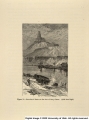
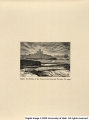
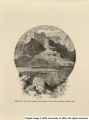
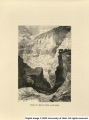
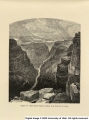
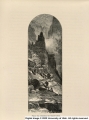
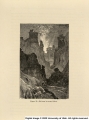
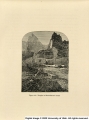
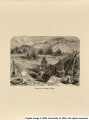
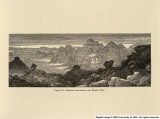
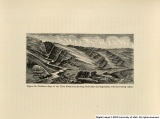
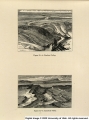
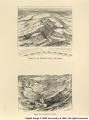
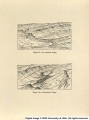
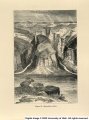
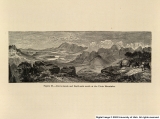
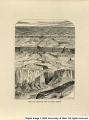
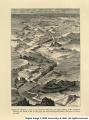
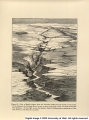
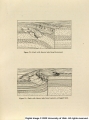
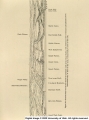
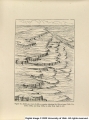
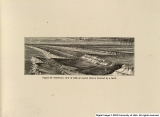
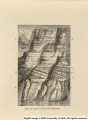
Show 170 EXPLORATION OF THE CANONS OF THE COLORADO. The bird's-eye view (Figure 61) is intended to show these topographic features. The escarpment below, and in the foreground, represents the Orange Cliffs, at the foot of Labyrinth Canon; the second escarpment, the Book Cliffs, at the foot of Gray Canon; the third, away in the distance, the Brown Cliffs, at the foot of the Canon of Desolation. It will be seen that the three tables incline to the north, and are abruptly terminated by cliffs on the south. For want of space the whole view is shortened. In the three caiions there are three distinct series of beds, belonging to three distinct geological periods. In the Canon of Desolation we have Tertiary sandstones; in Gray Caiion, Cretaceous sandstones, shales, and impure limestones; between the head of Labyrinth Caiion and the foot of Gray Canon, rocks of Cretaceous and Jurassic Age are found, but they are soft, and have not withstood the action of the water so as to form a canon. These formations differ not only in geological age, but also in structure and color. It will be interesting to notice how these structural differences affect the general contour of the country, and modify its scenic aspects. In the description of the three canons in the history of their exploration, the attentive reader has already noticed the great variety of geological * and topographic features observed as we passed along. Let us now take a view of the three lines of cliffs. The Brown Cliffs are apparently built of huge blocks of rock, exhibiting plainly the lines of stratification. The beds are usually massive and hard, and break with an angular fracture. The whole is very irregular, and set with crags, towers, and pinnacles. The upper beds of the Book Cliffs are somewhat like those last described, and they form a cap to extensive laminated beds of blue shales, in which we see exhibited the curious effects of rain sculpture. The whole face of the rock is set with buttresses, and these are carved with a fret-work of raised and rounded lines, that extend up and down the face of the rock, and unite below in large ridges. The little valleys between these ridgelets are the channels of rills that roll down the rocks during the storms, and from one standpoint you may look upon millions of these little waterways. Labyrinth Canon is cut through a homogeneous sandstone. The features of the canon itself have been described, but the cliffs with which it |