| OCR Text |
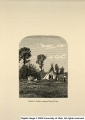
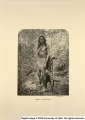
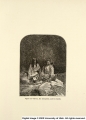
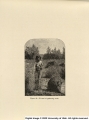
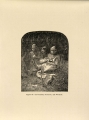
Show 42 EXPLORATION OF THE CANONS OF THE COLORADO. taking observations for latitude and longitude, and making excursions into the adjacent country. This morning, with two of the men, I start for the Agency. It is a toilsome walk, twenty miles of the distance being across a sand desert. Occasionally, we have to wade the river, crossing it back and forth. Toward evening, we cross several beautiful streams, which are tributaries of the Uinta, and we pass through pine groves and meadows, arriving just at dusk at the Reservation. Captain Dodds, the agent, is away, having gone to Salt Lake City, but his assistants receive us very kindly. It is rather pleasant to see a house once more, and some evidences of civilization, even if it is on an Indian reservation, several days' ride from the nearest home of the white man. July 2.-I go, this morning, to visit Tsau'-wi-at. This old chief is but the wreck of a man, and no longer has influence. Looking at him, you can scarcely realize that he is a man. His skin is shrunken, wrinkled, and dry, and seems to cover no more than a form of bones. He is said to be more than a hundred years old. I talk a little with him, but his conversation is incoherent, though he seems to take pride in showing me some medals, that must have been given him many years ago. He has a pipe which, he says, he has used a long time. I offer to exchange with him, and he seems to be glad to accept; so I add another to my collection of pipes. His wife, "The Bishop," as she is called, is a very garrulous old woman; she exerts a great influence, and is much revered. She is the only Indian woman I have known to occupy a place in the council ring. She seems, very much younger than her husband, and, though wrinkled and ugly, is still vigorous. She has much to say to me concerning the condition of the people, and seems very anxious that -they should learn to cultivate the soil, own farms, and live like white men. After talking a couple of hours with these old people, I go to see the farms. They are situated in a very beautiful district, where many fine streams of water meander across alluvial plains and meadows. These creeks have quite a fall, and it is very easy to take their waters out above, and, with them, overflow the lands. It will be remembered that irrigation is necessary, in this dry climate, to successful farming. Quite a number of Indians have each a patch of ground, of two or three acres, on which they are raising wheat, potatoes, turnips, |