| OCR Text |
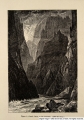
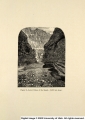
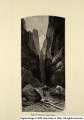
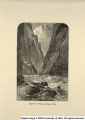
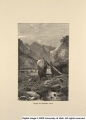
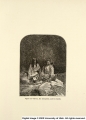
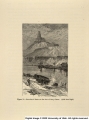
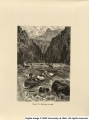
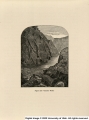
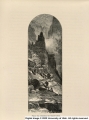
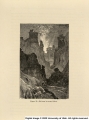
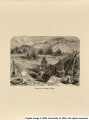
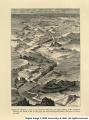
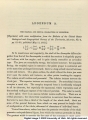
Show 16 EXPLORATION OF THE CANONS OF THE COLORADO. ening roar of the water is loud and constant, and I lie awake with thoughts of the morrow and the canons to come, interrupted now and then by characteristics of the scenery that attract my attention. And here I make a discovery. On looking at the mountain directly in front, the steepness of the slope is greatly exaggerated, while the distance to its summit and its true altitude are correspondingly diminished. I have heretofore found that to properly judge of the slope of a mountain side, you must see it in profile. In coming down the river this afternoon, I observed the slope of a particular part of the wall, and made an estimate of its altitude. While at supper, I noticed the same cliff from a position facing it, and it seemed steeper, but not half as high. Now lying on my side and looking at it, the true proportions appear. This seems a wonder, and I rise up to take a view of it standing. It is the same cliff as at supper time. Lying down again, it is the cliff as seen in profile, with a long slope and distant summit. Musing OD this, I forget "the morrow and the canons to come.'? I find a way to estimate the altitude and slope of an inclination as I can judge of distance along the horizon. The reason is simple. A reference to the stereoscope will suggest it. The distance between the eyes forms a base-line for optical triangulation. June \.-To-day we have an exciting ride. The river rolls down the canon at a wonderful rate, and, with no rocks in the way, we make almost railroad speed. Here and there the water rushes into a narrow gorge; the rocks on the side roll it into the center in great waves, and the boats go leaping and bounding over these like things of life. They remind me of scenes witnessed in Middle Park; herds of startled deer bounding through forests beset with fallen timber. I mention the resemblance to some of the hunters, and so striking is it that it comes to be a common expression, "See the black-tails jumping the logs." At times the waves break and roll over the boats, which necessitates much bailing, and obliges us to stop occasionally for that purpose. At one time, we run twelve miles in an hour, stoppages included. Last spring, I had a conversation with an old Indian named Pa'-ri-ats, who told me about one of his tribe attempting to run this canon. "The rocks," he said, holding his hands above his head, his arms vertical, and |