| OCR Text |
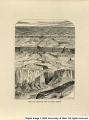
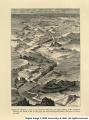
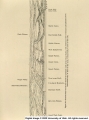
Show BASE LEVELS OF EROSION. 207 duction of low plains and hills for a number of miles back from the stream. North of the Canon of Desolation and south of the Uinta Mountains, another local base level of erosion is found, so *near to the general surface of the country that we find a district of valleys and low hills stretching back from Green River, up the Uinta to the west, and White River to the east, for many miles. North of the Uinta Mountains a third local base level of erosion is seen, but its influence on the topographic features is confined to a small area of two or three hundred square miles. Going up the chief lateral streams of the Colorado, we find one or more of these local base levels of erosion, where the streams course through valleys. Where these local base levels of erosion exist, forming valley and hill regions, the streams no longer cut their channels deeper, and the waters of the streams, running at a low angle, course slowly along and are not able to carry away the products of surface wash, and these are deposited along the flood-plains, in part, and in the valleys, among hills, and on the gentler slopes. This results in a redistribution of the material in irregular beds and aggregations. In this region, there are occasional local storms of great violence. Such storms may occur in any particular district only at intervals of many years, possibly centuries. When such a one does occur, it reopens great numbers of channels that have been filled by the ordinary wash of rains, and often cuts a new channel through beds which have accumulated in the manner above described. The structure of these beds is well exposed, and we find beds of clay, beds of sand, and beds of gravel occurring in a very irregular way, due to the vicissitudes of local wash, and, where the progress of erosion has been more or less by ilndermining, larger fragments or boulders are found, and these boulders are sometimes mixed with clay, and.sometimes with sand and gravel, and where thin sheets of eruptive rocks have been torn to pieces, more or less by undermining, (for such is the usual way in this country,) the beds appear to contain erratics, and in fact some of the rocks are erratics, for in the various changes in the levels produced they have often been transported many miles, not by sudden and rapid excursions, but moved a little from time to time. Again, the beds from which they were derived, doubtless, in many cases |