| OCR Text |
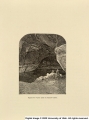
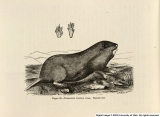
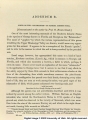
Show ADDENDUM B. NOTES ON THE "SALAMANDER" OF FLORIDA (GEOMYS TUZA). [Communicated to the author by Prof. G. Brown Goode."] One of the most interesting mammals of the Southern Atlantic States is the species of Geomys known in Florida and Georgia as the u Salamander." The name of u gopher," by which the various representatives of this genus inhabiting the Upper Mississippi Valley are known, would seem very appropriate for this animal. It appears to be a corruption of the French "gaufre'7, and to refer to the manner in which the soil is honey-combed by the pouched rats. Local usage, however, has appropriated this name to a kind of land-tortoise, Xerobates carolinus, (Linn^) Ag., which is common in Georgia and Florida, and which also excavates a burrow, a habit to which, perhaps, it owes its name. I have never heard an explanation of the name "salamander* in its application to Geomys tuza; but it occurs to me that it may allude to the safety enjoyed by these little animals in their subterranean abodes at the time of the devastating fires which sometimes consume the pine-forests. After such a conflagration has passed over their heads, destroying every other kind of life, they are seen at work among the ashes, very good types of the salamander of fable, which passes unharmed over burning coals, and " with her touch Quenches the fire, though blazing ne'er so much." Although the species was not scientifically described until 1817, it was noticed by several among the earlier writers. William Bartram, an English naturalist, who visited the Southeastern States in 1773, speaks of a large ground-rat, which he observed in the vicinity of Savannah, which was more than twice the size of the common Norway rat, and which in the night threw out earth, forming little mounds or hillocks.* * Travels through North and South Carolina, Georgia, East and West Florida, the Cherokee Country, the extensive territories of the Muscogulges or Creek Confederacy, and the country of the Chactaws. * * * -By William Bartram.-Dublin.-1793. p. 7. [Orig. ed. Philadelphia, 1791.] 36 COL |