| OCR Text |
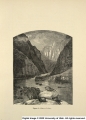
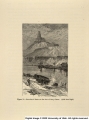
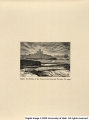
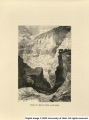
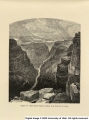
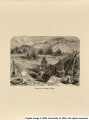
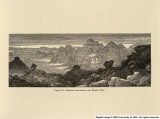
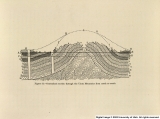
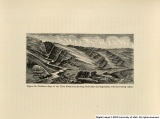
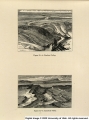
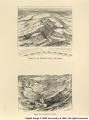
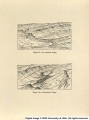
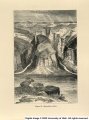
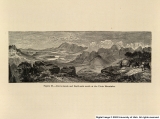
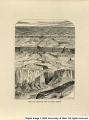
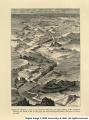
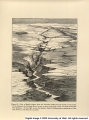
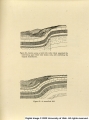
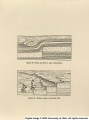
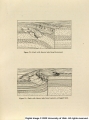
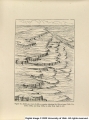
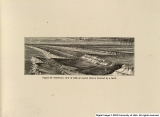
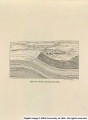
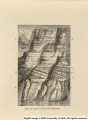
Show PLATEAUS AND HOG-BACKS. 169 It will be remembered that in the description of the country lying to the north of Red Canon and Brown's Park, it was explained that ridges were formed by the unequal progress of erosion through the upturned edges of the formations lying on the flank of the fold. Thus ridges are seen where the dip of the rocks is at a high angle- often twenty to forty five degrees; but where the dip is at a low angle-from one to five degrees-such ridges are not found; the cut edges of the formations stand in steep escarpments, or lines of cliffs, while the slope of the summit of the formation is very gentle, so that when you climb one cliff the descent is almost imperceptible to the foot of another. (Compare lines of cliffs, seen in Figure 61, with hog-back cliffs, seen in Figure 52.) In passing through the last three canons, we have observed that the rocks have thus gently dipped to the north, and so, in following the river to the south, we are constantly running into rocks of lower geological position and greater age. In this way we are able to study successive beds from higher to lower, as we would should we descend a shaft many thousands of feet in depth, as previously explained. Expand a fold like that of the Uinta Mountains, where the rocks dip from ten to ninety degrees, to a more gentle curve, where the rocks dip at a much smaller angle, so that the inclination is scarcely perceptible to the eye, and can only be determined by an extended leveling and tracing of the strata, and the hog-backs are thrown farther apart. The escarpments of these hog-backs, facing the axis of the fold, are still lines of cliffs; but the slopes on the opposite sides are so gently inclined as not, at once, to be apparent, and the streams heading near the brink of the cliffs, and running down the gentle slope away from this line, excavate their own valleys and canons, and so break up the plane of this slope that its inclination is not at once observed; in fact, it can only be discovered as a generalization from a careful study, and such an inclined plateau, when seen from the side away from the axis of plication, would usually be considered a range of mountains. Yet it has some features which readily distinguish it. The peaks are low mountains and hills, bordering the foot of the slope, and the table lands are beyond and above them, near the crest of the cliffs which face the axis. 22 COL |