| OCR Text |
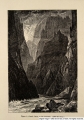
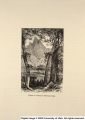
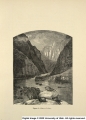
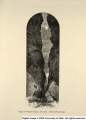
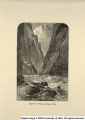
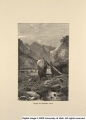
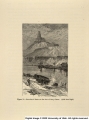
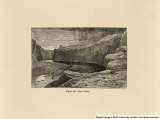
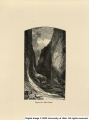
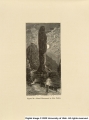
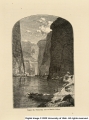
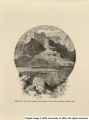
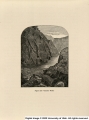
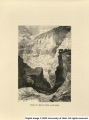
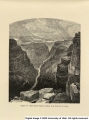
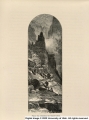
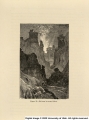
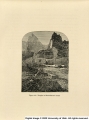
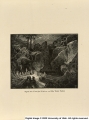
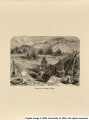
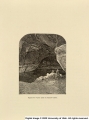
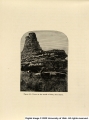
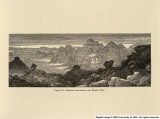
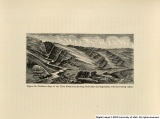
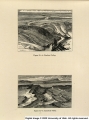
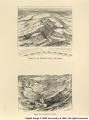
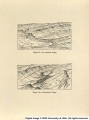
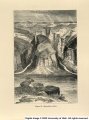
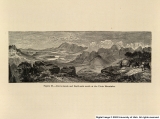
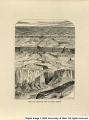
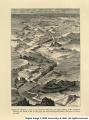
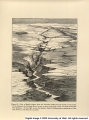
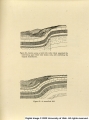
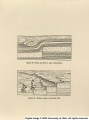
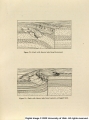
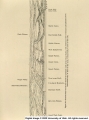
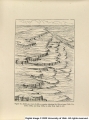
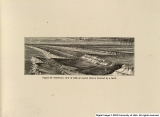
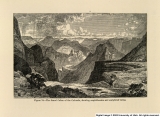
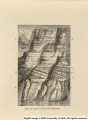
Show THE ORANGE CLIFFS. 173 lilac colored rocks, very distinctly stratified. The dark red rocks are very hard, the chocolate and lilac are very soft, so below we have terraced and buttressed walls and huge blocks scattered about, which have fallen from the upper part of the escarpment. The homogeneous sandstone above is slowly undermined-so slowly that, as the unsupported rocks yield to the force of gravity, fissures are formed parallel to the face of the cliff. Transverse vertical fissures are also formed, and thus the wall has a columnar appearance, like an escarpment of basalt, but on a giant scale; and it is these columns that tumble over at last, and break athwart into the huge blocks which are strewn over the lower terraces. The drainage of an inclined terrace is usually frorDt the brink of the cliff toward the foot of the terrace above, i. e., in the direction of the dip of the strata. As the channels of these intermittent streams approach the upper escarpment, they turn and rtin along its foot until they meet with larger and more permanent streams, which run against the dip of the rock in a direction opposite the course of the smaller channels, and these latter usually cut either quite through the folds, or at least through the harder series of rocks which form the cliffs. In some places the waters run down the face of the escarpment, and cut narrow canons, or gorges, back for a greater or less distance into the cliffs, until what would, otherwise, be nearly a straight wall, is cut into a very irregular line, with salients and deep re-entering angles. These^ canons which cut into the walls also have their lateral canons and gorges; and sometimes it occurs that a lateral canon from each of two adjacent main canons will coalesce at their heads, and gradually cut off the salient cliff from the ever retreating line. In this way buttes are formed. The sides of these buttresses have the same structural characteristics as the cliffs from which they have been cut. So the buttes on the plains below the Orange Cliffs are terraced and buttressed below, and fluted and columned above. Often the upper parts of these buttes are but groups of giant columns. The three lines of cliffs, which I have thus described, have been traced to the east but a few miles back from the river. The way in which they terminate is not known; but, from a general knowledge obtained from a |