| OCR Text |
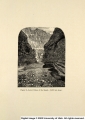
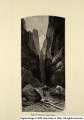
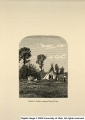
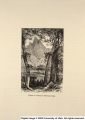
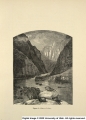
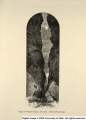
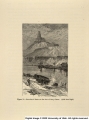
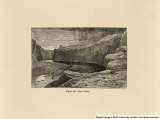
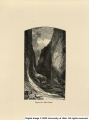
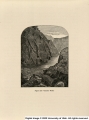
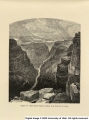
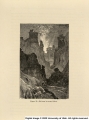
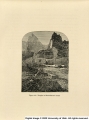
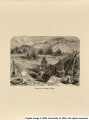
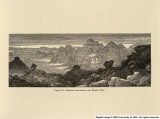
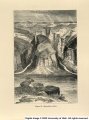
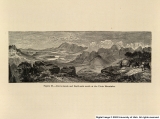
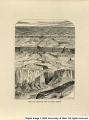
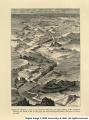
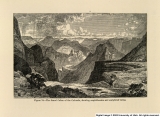
Show POTATO VALLEY. 137 toward the east it increases in height, till at last it stands for thirty miles an inaccessible, vertical wall, 2,500 feet high. Its eastern boundary is a line of cliffs, commencing at the foot of Potato Valley, and presenting an almost unbroken front to the Colorado River, at a point but four miles above the terminus of the western line, thus giving to the plateau a trapezoidal outline, having a length of fifty five miles, a breadth at the base of fifteen, at the apex of four, and standing at an altitude of 9,000 feet above sea level. For fifteen or twenty miles the western end is cut by a perfect net work of canons and short lines of cliffs, making travel across it almost impossible. The middle and eastern portions are quite level, and when once on the summit progress in any direction is easy. So far as I have been able to ascertain, we were the first white men to visit the plateau. The Indian name for a small elevation near the north end is Kai-par'-o-wits, so we called the whole plateau by that name. Our course from Camp No. 6 was northeast, down Potato Valley. At first we had low, rolling hills on either side, but these soon changed into vertical walls, and the valley became a wide canon, with a floor descending seventy five feet to the mile. Three miles from camp we came to the head of a small creek, which, receiving accessions from the north side, soon became a considerable stream, with such steep banks and swift current that great difficulty was experienced in fording. We called the creek by the same name as the valley, Potato Creek. At the end of twenty miles this canon valley was abruptly ended by a line of cliffs, that stood directly across its course, and into which the stream we followed entered by a narrow canon, 1,200 feet deep at the very outset, and filled from wall to wall by a torrent. It was down this gorge Mr. Hamblin and party traveled in 1871; but as such a route was manifestly impracticable in the present stage of water, we went into camp, and climbed the cliff to get a view of the country. On reaching the summit we found we were on the western rim of a basinlike region, seventy miles in length by fifty in breadth, and extending from the eastern slope of the Aquarius Plateau, on the north, to the Colorado River, on the south, and from the Henry Mountains, on the east, to our point of observation, on the west. A large portion of this area is naked, 18 COL |