| OCR Text |
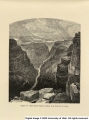
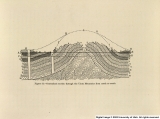
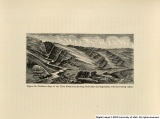
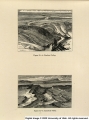
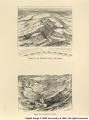
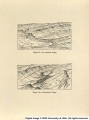
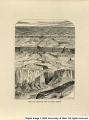
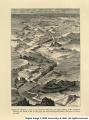
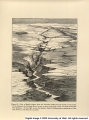
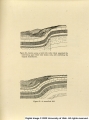
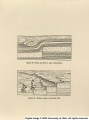
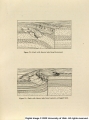
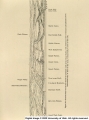
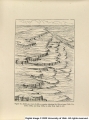
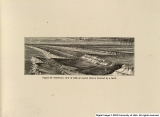
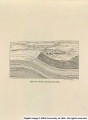
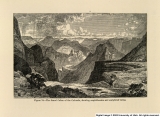
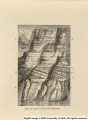
Show 186 EXPLORATION OF THE CANONS OF THE COLORADO. east of the axis of the flexure. Where it crosses the river the throw is about one thousand eight hundred feet, but it increases toward the south. Going west across Marble Canon to the foot of the Kaibab Plateau, w^e find another great fold. Tracing it from the northern extremity of the plateau to the south, we find that, nearly half way along, it branches so as to form twTo monoclinal folds. These separate rapidly until they are about four miles apart, and then run parallel to each other for twenty five or thirty miles, when they change into faults. The throw of the displacement is about three thousand feet, and is, approximately, the same, whether it appears as one fold, as two folds, or two faults. We have called these the Eastern Kaibab Faults. The down-fall of the beds, as in the Paria Fold, is to the east of the axis of flexure. Crossing the Kaibab Plateau, we come to another great monoclinal fold, which changes into a fault in some places, and these faults sometimes branch. The throw is here on the western side of the axis of flexure, and varies from five hundred to two thousand feet. We call this the Western Kaibab Fault. Continuing to the west, and passing over some minor faults, we reach, at last, the To-ro7-weap Valley. On the eastern side of this valley there is an abrupt wall, eight hundred or nine hundred feet high, which marks another fault, the throw of which is also to the west. This is the To-ro'-weap Fault. Its throw is but little over eight hundred feet, where it crosses the Grand Canon. Farther to the south it increases somewhat, but to the north it becomes less, and where it crosses the Vermilion Cliffs it is only about two hundred feet. Twelve or fifteen miles to the west is the Hurricane Ledge Fault. Its throw is also to the west. It has been traced from a point north of Toker-ville southward across the Grand Canon, and out to the brink of the great San Francisco Plateau. The throw varies from two to three thousand feet. Usually it is a sharp, or abrupt, fault, though here and there the strata have been caught below. Twenty five or thirty miles farther to the west, we find the Grand Wash Fault-a fault in some places, elsewhere a fold. Here, also, the throw is to the west, and it is more than five thousand feet where it crosses the Colorado. |