| OCR Text |
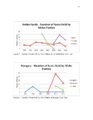
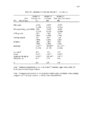
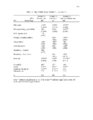
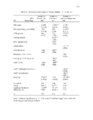
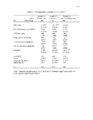
Show 122 when interviewed, People expect changes to come very fast and this government has proposed a number of laws that really change the labor market and the housing market but it will take time … when it's an economically difficult time like we have right now, it's very difficult to show the results. So in a time like this, it's easy to be out of government and to say that you want everything to be different because there's no responsibility to show that anything has gone different. (2014) Secondly, environmental nicheness, how much of a niche party's platform is dedicated to environmental issues, is significant and negative. For every one percent increase in mentions of environmental issues in a party's platform, the percent of vote received by a niche party decrease by .05 (RE) to .06 (FE). As discussed in Chapter II, and also noted with the bivariate correlations, it appears that environmental niche parties can be too "dark green" and that increasing "nicheness" may come at the cost of votes. While this finding is in the opposite direction of H18, it may be indicating that clinging more heavily onto a niche issue may not be in the best interest of niche parties seeking to increase their percent of the vote. The situation in Hungary with the environmental niche parties leading up to the 2014 parliamentary elections touches upon this element as well as the impact of a splintered niche now running as rival parties and one of those parties running in an electoral alliance. It is a case that touches upon many of the elements discussed in this section. To set the stage, the environmental niche party Politics can be Different (LMP) first emerged and participated in the 2009 European Parliament election, where it just missed gaining a seat, and then the 2010 national elections, where it obtained 16 seats. As politics became more contentious after the 2010 election due to Prime Minister Orbán's constitutional changes, for example, there was growing discussion about how to prepare for the 2014 election. Part of the LMP members preferred to join an alliance of |