| OCR Text |
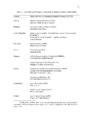
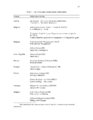
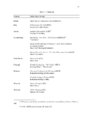
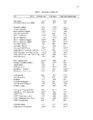
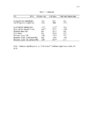
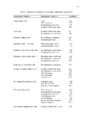
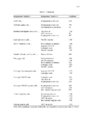
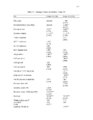
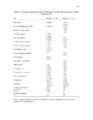
Show 15 is sometimes put in the radical right party family, but sometimes not. Its inclusion is contested because while the party was anti-immigrant, it was not homophobic (i.e., did not stress socially conservative values) like many other radical right parties (de Lange 2008; Meguid 2008; Mudde 2007).6 Therefore, while many argue that party families provide a rough proxy of what policies and issues a group of parties pursue, the substantial intragroup variation cannot be overlooked (Meyer and Miller 2015, 265-266). Given the many discrepancies between how scholars classify parties into party families and that certain classifications do not reflect the dynamic nature of niche parties, it cannot serve as the sole criterion but, rather, as a starting point. To be as accurate as possible in identifying the relevant niche parties, I have traced the origins of potential niche parties. The questions I answered for each party were: 1) Was this created as a niche party with a focus on a "big" issue or highly related cluster of issues? 2) If so, was the niche either environmental or minority containment/cultural protection? To answer these questions, I examined articles written about the founding of parties, the speeches and documents by the parties themselves about their raison d'être, and publications detailing the histories of parties. For parties in Central and Eastern Europe countries (CEECs) there is one other detail of note; in some cases the niche parties were technically formed prior to the collapse of the Soviet Union. In these situations, 1) the parties were not legally recognized actors by the governments, and 2) almost all of these parties emphasized independence alongside their niche issue, which would seemingly disqualify some 6 For this project, socially conservative values are not a requirement to be part of the minority containment/cultural protection (MCCP) niche. These are parties that fear for and strive to protect their native cultures, which could be conservative and Catholic cultures (France or Poland), for example, or more progressive and liberal cultures (the Netherlands). |