| OCR Text |
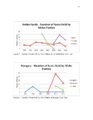
Show 59 pursued an adversarial strategy (Bale 2003; Eatwell 2000, 422; Meguid 2008; Veugelers and Magnan 2005, 841). One other dimension needs to be further developed, or relaxed, with regards to mainstream strategic explanations: the number of parties. To elaborate, in Meguid's model, it is assumed that there are only three parties in every system: two mainstream parties and one niche party. It is very unlikely that a country has only three parties, so how do these strategies work in situations that have more than two relevant mainstream parties, like Denmark, or competing niche parties, as is the case with the two environmental niche parties in Hungary? In Denmark, if analysis was limited to only two mainstream parties, key power exchanges would be missed. While the Social Democratic Party (SD) has consistently come in first or second place in elections going back to the 1950s, it would be very difficult to select just one other mainstream party for inclusion in order to satisfy Meguid's assumption. The Conservative People's Party (KF) and Liberals (V) have frequently traded off second and third place in election results over the decades, so to include one and exclude the other would overlook what could be a crucial component of the dynamics in Danish politics. Additionally, there are cases like Hungary where there is more than one party competing over a niche issue. In this case, there are two environmental niche parties - Politics Can be Different (LMP), and its splinter/rival party Dialogue for Hungary (PM). The existence of and competition from additional niche parties is a variable that seems highly relevant to explaining the electoral success of this type of party. My project relaxes Meguid's assumption by taking into consideration the top three mainstream party competitors in elections (one more from the left, one more from |