| OCR Text |
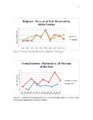
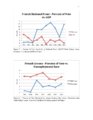
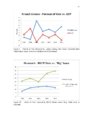
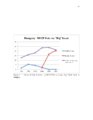
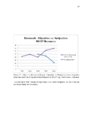
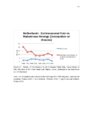
Show 36 institutional hurdle for niche parties, especially when facing, for example, a unitary system employing a majoritarian electoral system. Hypothesis 3: Niche parties competing in countries with a federal state structure are more likely to achieve higher levels of electoral success (percent of the vote, number of seats, and movement by mainstream parties on niche issues) than those niche parties competing in countries with a unitary state structure. There are only a few cases of federalism in the European Union, including Germany, Austria, and Belgium as well as a few quasi-federal, or debatable cases, like Spain, the UK, and Italy (CIA World Factbook 2015; Woodward 1997, 5). Since none of my case studies fit here, I will briefly consider the case of Belgium, which is interesting since it transitioned into a federalist system, providing the opportunity to examine the electoral fortunes of niche parties throughout this process (Gerard 2014). As Deschouwer explain, The first major reform of the Constitution came in 1970. The basic principles of the future federal country were laid down, but this was done more as an attempt to avoid further devolution than as an attempt to find a federal-type solution for the tensions between the north and south. The constitutional reform of 1980 can be considered a fundamental step toward a federal Belgium, as it gave Belgium's constituent parts real and important powers: namely, a parliament (though not yet directly elected) and a government. Subsequent reforms were built on these foundations, and in 1993 a new Article 1 of the Belgian Constitution was introduced, stating explicitly that Belgium is a federal country. Since 1995 (1989 in Brussels), the regional parliaments have been directly elected. (2005, 50-51) According to Hypothesis 3 on federalism, one would expect the niche parties in Belgium to see improvements in their national success following the introduction of elections at the regional level, after 1995. From Figure 3 it's apparent that both environmental niche parties did experience a spike in electoral success in 1999, however, this was not continued in subsequent elections. What remains unclear at this point is how much, if any, of the unusually high electoral success in 1999 can be attributed to federalism and |